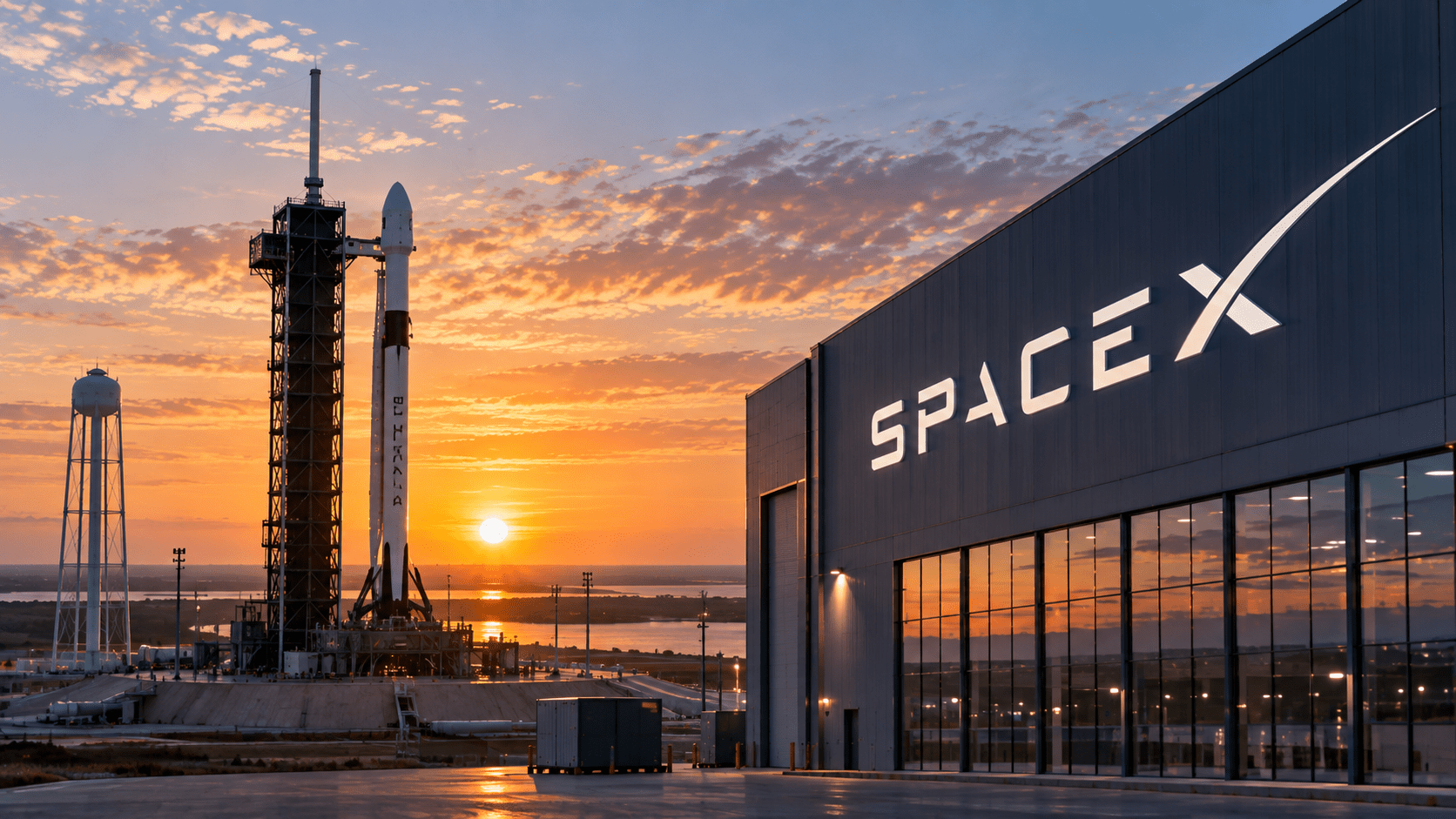
SpaceX stock is back in focus after NASA awarded Elon Musk’s aerospace company a $946 million contract extension to transport astronauts to the International Space Station, reinforcing its position as a major provider of American human spaceflight services. Announced on September 18, 2026, the agreement covers three additional crewed missions through 2030 and increases the total value of SpaceX’s Commercial Crew Transportation Capability contract to $5.92 billion. The expansion comes as the aerospace industry faces rising demand for launch services, growing investment in satellite communications, and intensifying competition for government contracts.
The award provides SpaceX with additional contracted business extending toward the end of the International Space Station’s planned operational life. However, the implications for investors reach beyond the immediate value of the agreement. NASA’s continued reliance on SpaceX highlights the company’s established position in crew transportation, while the agency’s efforts to maintain a second American provider demonstrate that future government business will remain subject to competition, technical requirements, and changing space exploration priorities.
For shareholders, the latest contract presents an opportunity to examine how SpaceX’s established launch operations contribute to its financial outlook alongside its expanding Starlink satellite business and ambitious Starship development program. The central question is whether the company’s growing portfolio of government and commercial activities can continue supporting investor expectations as the space industry enters a new phase of development.
NASA’s $946 Million Contract Gives SpaceX Three More Crewed Missions
The latest agreement adds three missions, designated Crew-15, Crew-16, and Crew-17, to SpaceX’s existing contract with NASA. The modification increases the total number of contracted SpaceX crew transportation missions to 17, with the performance period extending through 2030. NASA has identified mission readiness dates in 2027 and 2028, providing additional planning visibility as the agency prepares for continued operations aboard the International Space Station.
The $946 million modification covers considerably more than the cost of launching astronauts into orbit. SpaceX will be responsible for ground operations, spacecraft preparation, launch services, in-orbit mission support, cargo transportation, and the return and recovery of astronauts and their spacecraft. The agreement also includes maintaining the Dragon capsule as an emergency escape vehicle while it remains docked to the station, an essential capability for protecting crews during their time in orbit.
Related articles





The contract’s financial significance lies partly in the visibility it provides for future operations. Rather than relying exclusively on individual launch opportunities, SpaceX has secured additional government missions within an established program that requires extensive preparation, operational support, and coordination with NASA. The fixed-price structure also means that the company’s profitability will depend on its ability to execute the contracted services while managing the associated costs.
Although the award represents nearly $1 billion in additional contract value, that amount should not be confused with immediate revenue or profit. The services will be performed over several years, and the financial contribution from each mission will depend on the relevant accounting treatment, operational expenditures, and timing of contract performance. Investors will therefore need to evaluate the award within SpaceX’s broader financial results rather than treating its full value as an immediate addition to earnings.
Why NASA Keeps Turning to SpaceX for America’s Most Important Crew Flights
SpaceX’s growing role in American human spaceflight reflects a relationship that began more than a decade ago. In 2014, NASA selected SpaceX and Boeing as commercial partners to develop domestic transportation systems capable of carrying astronauts to and from the International Space Station. The initiative followed the retirement of the Space Shuttle program in 2011, which had left the United States dependent on Russian Soyuz spacecraft for regular astronaut transportation.
SpaceX subsequently developed its Crew Dragon spacecraft and Falcon 9 launch system under NASA’s Commercial Crew Program, receiving certification for astronaut transportation in November 2020. Since then, the company has established a regular schedule of crew rotation missions, demonstrating the ability to transport astronauts, deliver essential supplies, and return crews safely to Earth.
The company’s Crew-12 mission was docked to the International Space Station when NASA announced the latest contract expansion, while preparations were continuing for the Crew-13 mission, targeted for launch in early October 2026. This established operating schedule illustrates the importance of SpaceX’s existing transportation infrastructure, which supports recurring missions rather than isolated demonstration flights.
For investors, the commercial relevance of this operational history lies in the barriers associated with developing and maintaining a certified human spaceflight system. Astronaut transportation requires extensive testing, specialized infrastructure, stringent safety procedures, and continuing operational oversight. These requirements create substantial technical and financial challenges for companies seeking to enter the market.
SpaceX’s experience does not guarantee future government awards, but it provides an established record of performing the services NASA requires. The latest contract extension reinforces that relationship while supporting continued utilization of the company’s existing spacecraft, launch vehicles, and mission infrastructure.
Boeing’s Starliner Problems Reveal Why NASA’s Decision Matters
The new SpaceX agreement also highlights the challenges facing Boeing (NYSE: BA), NASA’s other commercial crew transportation partner. Boeing’s Starliner spacecraft experienced technical difficulties during its 2024 crewed flight test, leading NASA to return the vehicle to Earth without its astronauts. The two crew members subsequently returned aboard a SpaceX Dragon spacecraft after an unexpectedly extended stay on the International Space Station.
The incident demonstrated the importance of maintaining reliable transportation capabilities while also exposing the difficulties associated with developing a second operational American crew spacecraft. SpaceX’s established Dragon system has continued supporting crew rotation missions, while Boeing has been working toward meeting NASA’s requirements for future Starliner operations.
However, NASA’s latest award should not be interpreted as a decision to abandon Boeing or award all future astronaut transportation work exclusively to SpaceX. The agency continues to pursue a strategy involving two commercial crew providers, recognizing that dependence on a single transportation system could create operational risks if technical problems, accidents, or launch delays temporarily interrupt service.
Recent reporting indicates that NASA has also been discussing potential future Starliner missions with Boeing as part of its longer-term transportation planning. The agency’s objective remains maintaining reliable American access to low Earth orbit through multiple commercial partners.
For SpaceX shareholders, the distinction matters because the company’s current operating position supports additional contracted business, but the future competitive environment could change as Boeing progresses toward operational certification. For Boeing investors, continued NASA support provides an opportunity to evaluate Starliner’s development and its potential role in future crew transportation, although the timing and financial implications of additional missions remain uncertain.
The latest contract therefore reflects both SpaceX’s established operational position and NASA’s continuing interest in developing a more resilient commercial space transportation industry.
What the NASA Deal Means for SpaceX Stock and Its Financial Outlook
The $946 million extension adds another component to SpaceX’s contracted business, but its importance must be considered alongside the company’s wider operations. SpaceX generates revenue from multiple activities, including government launches, commercial satellite deployment, crew transportation, and its Starlink satellite communications service. These businesses operate under different commercial models, making their contributions to revenue growth, operating margins, and cash flow important considerations for investors assessing the company.
NASA’s commercial crew arrangement provides visibility into future transportation activity through an established government customer. However, the contract also involves substantial operational responsibilities, and its fixed-price structure places importance on maintaining cost discipline throughout mission preparation and execution. The financial benefit will therefore depend on how efficiently SpaceX performs the additional missions and how the resulting revenue and expenses are recognized over the contract period.
The announcement produced a relatively modest immediate stock-market response. SpaceX shares traded around $153 late on September 18, approximately 1% lower during the session, indicating that investors were considering the contract alongside other factors affecting the company’s valuation and broader market conditions. A substantial government award does not necessarily produce an immediate share-price increase, particularly when market participants have already incorporated expectations about future business into their assessments.
The broader significance of the agreement may instead lie in the additional revenue visibility it provides as SpaceX continues investing in its other businesses. Investors will be examining whether established operations can contribute dependable cash flow while the company pursues development projects that require substantial capital expenditure.
That balance between existing revenue-generating activities and future growth opportunities remains central to evaluating SpaceX’s financial trajectory.
Starlink and Starship Could Shape the Bigger SpaceX Investment Story
Although the NASA contract strengthens SpaceX’s crew transportation business, investors are also assessing the company’s broader ambitions in satellite communications and next-generation launch technology. Starlink has expanded SpaceX’s commercial activities beyond traditional launch services by providing satellite-based internet connectivity to consumers, businesses, and other customers. Its development creates a different revenue model from government spaceflight contracts, with recurring subscriptions and network expansion introducing additional considerations for long-term financial performance.
Starship represents another important element of the company’s strategy. The next-generation launch system is being developed to support substantially larger payloads, reusable transportation capabilities, and future missions beyond low Earth orbit. However, the program requires extensive testing, infrastructure development, and regulatory approvals before its full commercial potential can be realized.
The relationship between these projects and the latest NASA award is therefore primarily financial and operational rather than contractual. The $946 million agreement concerns additional Crew Dragon missions using SpaceX’s established transportation architecture, not a direct award for Starship development or Starlink expansion.
Nevertheless, the company’s ability to maintain established government relationships while developing new technologies remains relevant to its overall investment profile. Revenue from existing operations can contribute to the financial resources available for future development, although the precise allocation of those resources and the profitability of individual programs depend on management’s decisions and the company’s operating performance.
As the commercial space industry expands, investors will be looking for evidence that SpaceX can manage these different activities without allowing the costs and execution risks of future projects to undermine the financial performance of its established businesses.
The International Space Station’s Retirement Creates Another Important Deadline
The extension of SpaceX’s crew transportation contract through 2030 comes as NASA prepares for the eventual retirement of the International Space Station. The orbiting laboratory has served as a central platform for international scientific research and human spaceflight for decades, but its planned transition toward retirement will change the long-term demand for transportation services to the existing station.
For SpaceX, the additional missions provide contracted activity during the remaining operational period of the ISS. Beyond that horizon, future crew transportation opportunities will depend on the development of commercial space stations, NASA’s exploration priorities, and demand from private customers and international partners.
NASA has been supporting the development of commercially operated destinations in low Earth orbit as part of its longer-term strategy. These facilities could create opportunities for transportation providers capable of carrying astronauts and cargo to orbital destinations, although their commercial viability will depend on development progress, funding, customer demand, and the eventual structure of NASA’s purchasing arrangements.
SpaceX’s experience with Dragon and Falcon 9 gives it an established operational foundation for evaluating future transportation opportunities, but the transition from the ISS to commercial stations will introduce new contractual and competitive conditions.
The latest NASA agreement therefore provides additional business visibility through 2030 without resolving every question about the company’s crew transportation activities beyond that date. Investors will need to monitor the development of alternative orbital destinations and the evolution of NASA’s commercial space strategy to assess how demand for these services may change.
SpaceX’s Next Challenge Is Turning Its Expanding Contract Portfolio Into Sustainable Growth
The $946 million NASA contract extension reinforces SpaceX’s position as an established provider of American crew transportation services and increases the total value of its commercial crew agreement to $5.92 billion. By securing three additional missions through 2030, the company has gained further visibility into its future government operations while continuing to support NASA’s presence aboard the International Space Station.
For shareholders, the award provides another piece of information for evaluating SpaceX’s business alongside its commercial launch operations, Starlink expansion, and Starship development. The contract demonstrates continued demand for the company’s existing transportation capabilities, but its ultimate financial contribution will depend on execution costs, revenue recognition, and performance across the broader business.
Attention will now turn toward the company’s next scheduled crew mission, the progression of its existing launch commitments, and the financial results associated with its expanding portfolio of activities. Investors will also be monitoring NASA’s plans for commercial space stations and Boeing’s progress with Starliner, both of which could influence the future market for astronaut transportation.
The latest award confirms that SpaceX will remain an important part of NASA’s crew transportation plans through the end of the decade. What remains to be established is how effectively the company can translate its growing collection of government and commercial opportunities into sustained earnings and cash flow.
For SpaceX stock, the nearly $1 billion contract is another significant development. The longer-term question is how much value the company can generate from the expanding business it has built around it.
Disclaimer
This article is for informational purposes only and does not constitute financial or investment advice. Readers should conduct their own research or consult a qualified financial advisor before making investment decisions. This article was researched and drafted with the support of AI; it should be reviewed, fact-checked, and edited by the editorial team before publication.