
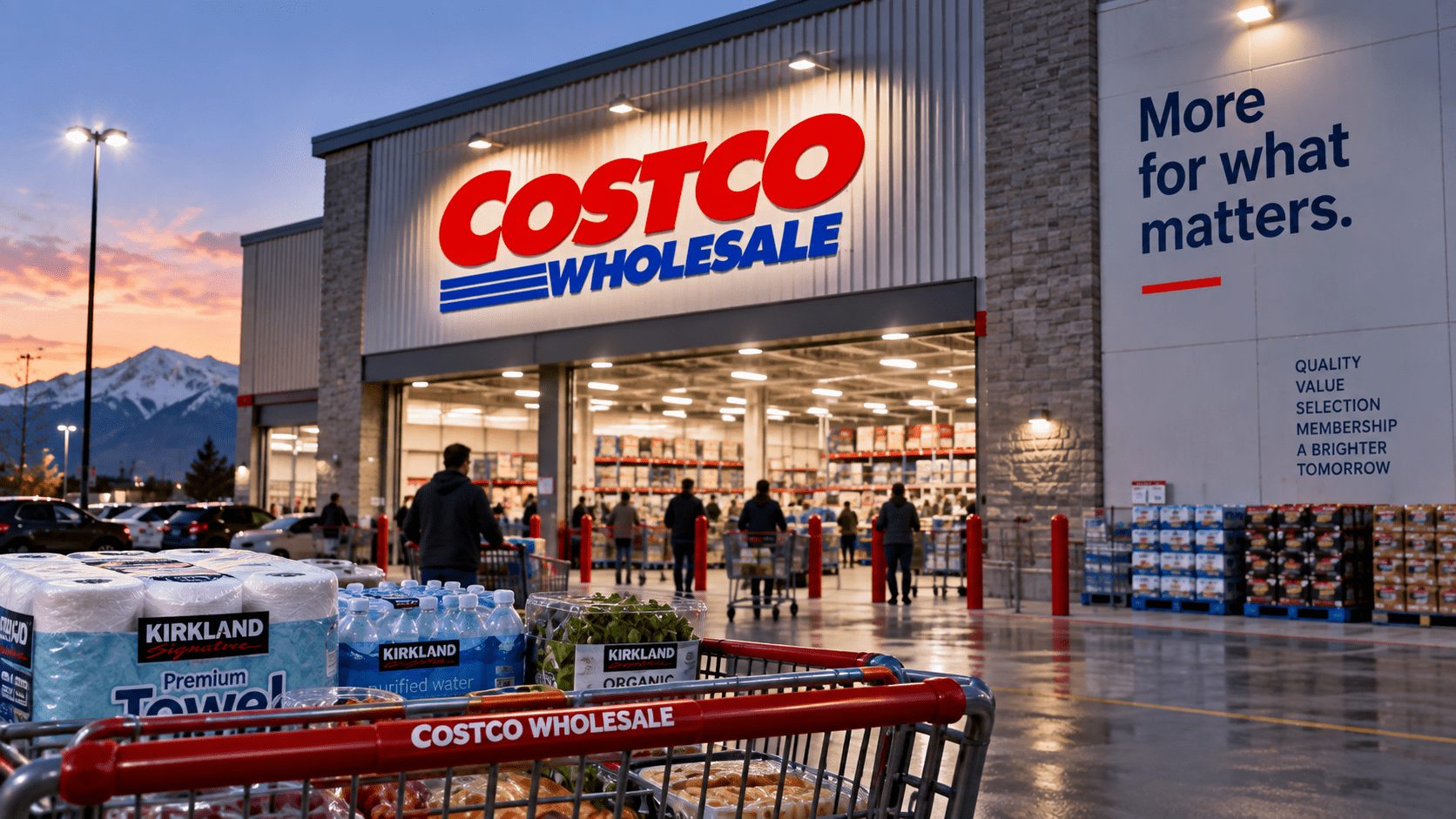
Costco stock earnings are approaching a critical moment for one of America’s largest retailers. On Thursday, September 24, 2026, Costco Wholesale Corporation (NASDAQ: COST) will report its fiscal fourth-quarter and full-year financial results after the U.S. stock market closes, with Wall Street expecting approximately $95 billion in quarterly revenue and earnings of around $6.53 per share. Despite strong sales growth and continued expansion, Costco shares have retreated considerably from their May highs, raising the stakes for a company whose premium valuation has historically reflected expectations of sustained profitability and exceptional customer loyalty. The upcoming announcement will therefore test more than Costco’s ability to generate revenue: it will reveal whether the warehouse giant’s financial performance can continue supporting the expectations embedded in its stock price.
The timing makes this earnings report particularly interesting because Costco has already disclosed much of its fourth-quarter sales performance. Investors know that the company continued attracting customers and generating substantial revenue during the summer, while its digital operations maintained strong momentum. What remains uncertain is how effectively those sales translated into profits, whether membership income continued expanding, and how management views the opportunities and challenges facing the business in fiscal 2027. With COST stock trading substantially below its spring peak, the financial results could provide an important opportunity for investors to reassess the relationship between Costco’s operating strength and its market valuation.
Costco’s $93.9 Billion Sales Surge Has Already Raised the Stakes
The most unusual aspect of Costco’s upcoming earnings announcement is that investors already have a detailed picture of the company’s revenue momentum. On September 2, Costco reported net sales of $93.9 billion for the 16-week fourth quarter ended August 30, 2026, representing an 11.3% increase from $84.4 billion in the comparable period a year earlier. August alone generated $23.7 billion in net sales, an increase of 9.9% year over year, demonstrating that the warehouse retailer continued generating substantial consumer spending as its fiscal year drew to a close. For the full fiscal year, Costco reported net sales of $297.3 billion, approximately 10.2% higher than in fiscal 2025, providing further evidence of the company’s expanding business and its ability to sustain revenue growth across a large network of warehouses.
Those figures provide a strong foundation for the upcoming financial results, but they also create an important distinction between what investors already know and what remains to be revealed. Costco’s reported net sales primarily reflect merchandise revenue, whereas the company’s total quarterly revenue also includes membership fees, an important component of its business model. Investors will therefore examine the final revenue figure alongside membership income and the company’s operating performance to establish how much of its sales growth contributed to profitability. Strong merchandise demand does not automatically guarantee equally strong earnings, particularly when changes in product costs, labor expenses, warehouse operations, and other financial factors can influence margins.
Costco’s comparable-sales performance offers additional insight into the underlying strength of its business. During the fourth quarter, the company reported comparable-sales growth of 9.4% overall, including a 10.7% increase in the United States. Excluding the effects of gasoline prices and foreign exchange movements, companywide comparable-sales growth was 6.7%, providing a clearer measure of underlying merchandise demand. Digitally enabled comparable sales also increased 19.5%, highlighting the company’s continued expansion beyond traditional warehouse shopping.
Related articles





Wall Street’s $6.53 Earnings Target Leaves Little Room for Disappointment
Wall Street expects Costco to report fourth-quarter earnings of approximately $6.53 per share, compared with $5.87 in the same quarter last year, while total revenue is projected to reach roughly $94.9 billion. Those estimates imply that analysts anticipate another period of meaningful earnings growth alongside the company’s already disclosed increase in sales. However, meeting expectations may not be enough on its own to determine the market’s reaction, particularly given Costco’s premium valuation and the amount of information investors have already received about quarterly revenue. The earnings announcement will also provide a clearer picture of how efficiently Costco converted higher sales into profits and whether its operating performance remains consistent with expectations for the coming fiscal year.
Some analysts have expressed reservations about how comfortably Costco will meet the prevailing earnings target. In a September 17 report covered by Barron’s, BofA Securities projected adjusted earnings of $6.52 per share, slightly below the $6.55 consensus estimate cited in the report, while Oppenheimer analysts also questioned whether the higher estimate was achievable. Consensus figures vary slightly between financial data providers, but the underlying uncertainty is consistent: although Costco’s sales performance has been strong, the final earnings result will depend on operating costs, merchandise margins, and other factors that cannot be determined from revenue figures alone.
Costco’s previous quarterly performance illustrates why this distinction matters. In its fiscal third quarter, the company reported diluted earnings of $4.93 per share, compared with $4.28 a year earlier, while net sales increased to $69.15 billion from $61.96 billion. The results demonstrated continued growth in both revenue and earnings, but the fourth-quarter announcement will arrive against a different market backdrop, with investors paying particularly close attention to profitability and the outlook for fiscal 2027.
Why Costco Stock Has Retreated Despite Its Expanding Business
Costco’s recent stock-market performance presents an interesting contrast with the company’s operating results. Shares closed at $895.31 on Friday, September 18, 2026, gaining 0.15% during the session but remaining approximately 18% below the stock’s reported 52-week high of $1,096.50, reached on May 19. The retreat has occurred even as Costco continued reporting substantial sales growth, illustrating how a company’s share price can move in a different direction from its underlying revenue and earnings.
Valuation provides one possible explanation for the disconnect. Costco has traditionally attracted investors willing to pay a relatively high multiple of earnings for a business characterized by recurring membership income, substantial customer loyalty, and consistent expansion. However, a premium earnings multiple also reflects expectations about future performance, meaning that changes in anticipated growth can influence the share price even when a company continues reporting positive financial results. If investors become less willing to pay the same multiple for Costco’s future earnings, the stock can decline without a corresponding deterioration in its current sales figures. Conversely, financial results that strengthen confidence in the company’s longer-term profitability can influence how investors assess its valuation.
Recent analyst commentary reflects the uncertainty surrounding Costco’s near-term outlook. Ahead of the earnings announcement, BofA Securities reduced its price target for COST stock to $1,095, while continuing to indicate substantial potential upside relative to the company’s September 18 closing price. Such targets represent analysts‘ assessments rather than guaranteed future prices, and the actual market reaction will depend on the financial results, investor expectations, and broader market conditions.
Membership Growth Could Reveal More Than Costco’s Sales Figures
While Costco’s merchandise sales attract considerable attention, its membership model remains a defining feature of the company’s financial performance. Customers pay annual fees to access Costco’s warehouses and services, creating a recurring revenue stream that operates alongside the company’s merchandise business. In fiscal 2025, Costco generated $5.323 billion in membership-fee revenue, including $1.724 billion during the fourth quarter, demonstrating the substantial contribution that paid memberships make to its overall financial results. The upcoming announcement will show how this revenue stream developed during fiscal 2026 and whether membership growth continued supporting the company’s expanding warehouse network.
Investors will be particularly interested in paid membership growth, renewal rates, and Executive membership trends because these indicators provide information about the durability of Costco’s relationship with its customers. Strong membership retention suggests that existing shoppers continue finding value in the company’s warehouse offering, while growth in paid memberships can demonstrate its ability to attract new customers as additional locations open. Costco operated 939 warehouses at the time of its September sales announcement, compared with 914 at the time of its fiscal 2025 fourth-quarter earnings release, making the relationship between network expansion and membership growth an important consideration for investors assessing the company’s longer-term prospects.
Membership performance may also help investors understand whether Costco can sustain earnings growth beyond the immediate reporting period. Expanding the warehouse network creates opportunities to reach new customers, but it also requires investment in locations, staffing, logistics, and other operating activities. Continued membership growth and healthy renewal rates can provide additional context for evaluating those expenditures, particularly when considered alongside merchandise margins and overall profitability. The company’s digitally enabled sales growth adds another dimension to this analysis, as investors assess how Costco’s traditional warehouse operations and expanding digital services contribute to customer engagement and financial performance.
Another subject attracting attention ahead of the earnings announcement is the possibility of a special dividend. Barron’s recently discussed whether Costco might announce another extraordinary cash distribution, noting that the company previously paid a special dividend of $15 per share in January 2024. However, Costco has not confirmed any new special dividend in connection with the September 24 earnings release, and the possibility remains speculative rather than an established part of the company’s upcoming announcement.
Three Factors Could Shape COST Stock’s Earnings Reaction
The first major factor investors will examine on September 24 is Costco’s earnings performance relative to Wall Street expectations. With analysts anticipating earnings of approximately $6.53 per share, results above that figure could provide evidence that the company converted its substantial revenue growth into profits more effectively than expected. Conversely, earnings below consensus could prompt closer examination of merchandise margins, labor expenses, and other operating costs, particularly because Costco has already disclosed its strong quarterly sales performance. However, the relationship between an earnings surprise and the stock’s subsequent movement is not automatic, as investors may already have incorporated expectations about stronger or weaker profitability into the share price.
The second factor will be membership performance, which could provide additional insight into the sustainability of Costco’s business model. Growth in paid memberships, stable renewal rates, and expanding membership-fee revenue would offer evidence about the company’s ability to maintain recurring income as its warehouse network develops. Investors will also examine whether the company’s digital operations and broader expansion strategy are contributing to its financial performance, rather than relying solely on headline sales growth as an indicator of business strength.
The third factor will be management’s outlook for fiscal 2027. Commentary on consumer spending, merchandise costs, warehouse expansion, and operating conditions could influence expectations for Costco’s future profitability. A strong historical quarter accompanied by cautious forward-looking statements could produce a different market reaction from similar financial results supported by indications of continued operating momentum. Likewise, an earnings result below consensus would not necessarily determine the direction of COST stock if investors had already anticipated weaker profitability or placed greater emphasis on management’s future expectations.
Costco is scheduled to hold its fourth-quarter earnings conference call at 5:00 p.m. Eastern Time on Thursday, September 24. The discussion will give investors an opportunity to examine management’s interpretation of the results and obtain additional context about the company’s operating environment.
September 24 Could Redefine the Costco Stock Debate
Costco enters earnings week with substantial sales growth already confirmed, expectations for another quarter of higher profits, and a share price that remains considerably below its May peak. The company has disclosed $93.9 billion in fourth-quarter net sales, while Wall Street anticipates approximately $94.9 billion in total revenue and earnings of around $6.53 per share. Together, those figures establish the central question facing investors: whether Costco’s continued expansion and earnings growth can support the premium valuation reflected in its stock price, particularly as the market reassesses expectations for the company’s future performance.
The September 24 announcement will provide important new evidence about Costco’s profitability, membership economics, and ability to sustain growth across its expanding business. Investors will then turn their attention toward fiscal 2027, including management’s warehouse development plans, consumer spending trends, operating margins, and the company’s next monthly sales update, scheduled for October 7.
For shareholders, the upcoming earnings report represents an opportunity to distinguish between the company’s demonstrated operating strength and the expectations already reflected in its market valuation. Costco has continued attracting customers, expanding its business, and generating substantial revenue, but the market’s next assessment will depend on the earnings, membership performance, and forward-looking information that remain undisclosed. With Thursday’s announcement approaching, the sales figures have already set the stage. The remaining question is how much profit came with them.
Disclaimer
This article is for informational purposes only and does not constitute financial or investment advice. Readers should conduct their own research or consult a qualified financial advisor before making investment decisions. This article was researched and drafted with the support of AI; it should be reviewed, fact-checked, and edited by the editorial team before publication.