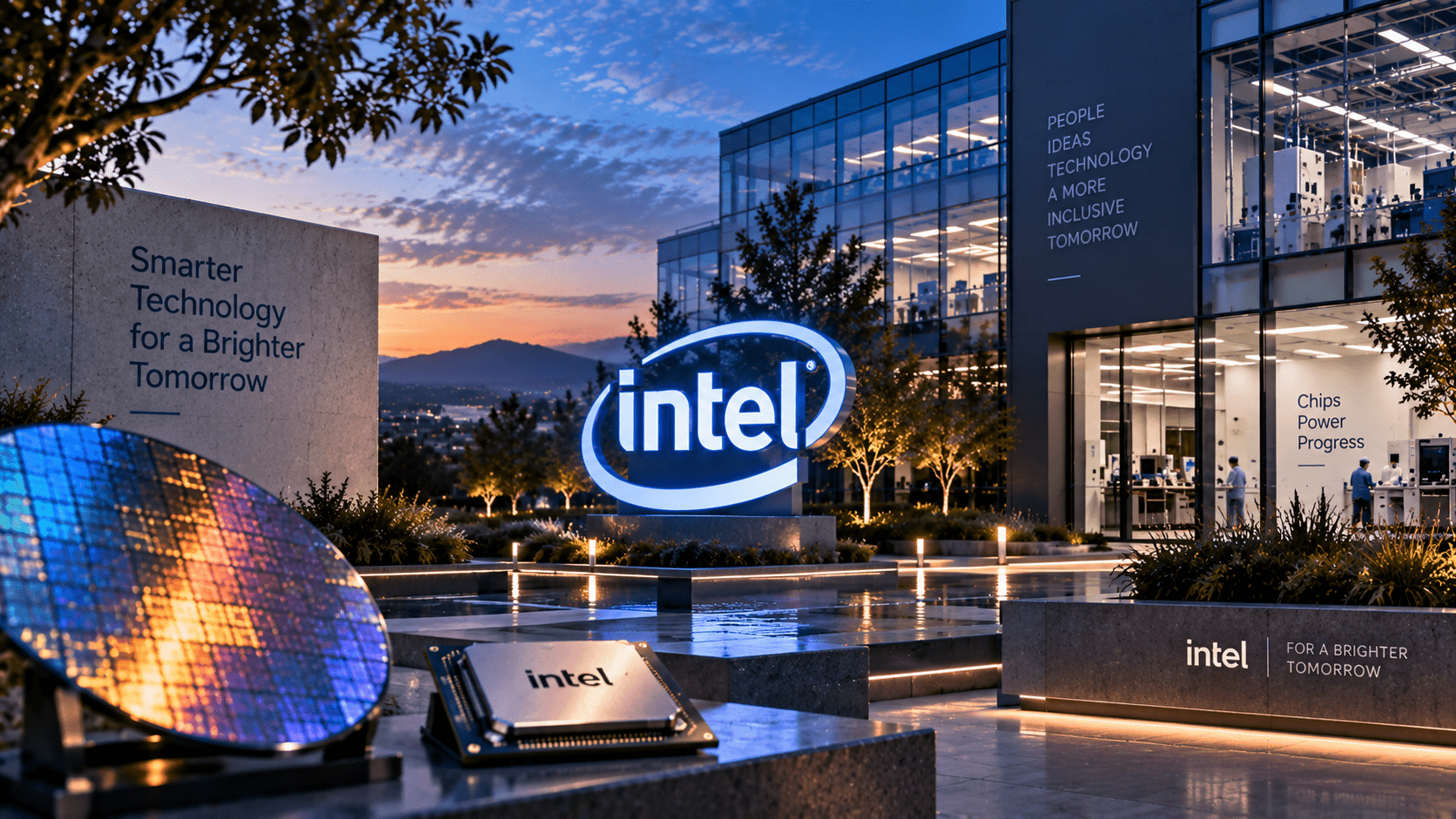
Intel stock surged more than 13% on Monday, September 21, 2026, as growing enthusiasm for artificial intelligence infrastructure, improving semiconductor manufacturing prospects, and reports of a potential partnership with South Korean memory giant SK Hynix fueled a powerful rally in the chipmaker’s shares. Intel Corporation (NASDAQ: INTC) climbed above $120 during the session, extending a remarkable recovery that has brought renewed attention to its efforts to rebuild its manufacturing business and strengthen its position in the global semiconductor industry. The advance came as investors reassessed Intel’s opportunities in AI computing, data-center processors, and domestic chip production, with several Wall Street analysts raising their expectations for the company’s future performance.
The latest rally represents an important development for a company that has spent years confronting manufacturing delays, intense competition, and questions about the financial viability of its ambitious foundry strategy. Intel’s recent progress in advanced chipmaking, combined with growing demand for server processors and the possibility of bringing additional memory production to its Ohio manufacturing complex, has created several potential avenues for growth. However, the company’s financial results remain mixed, and its expanding valuation increasingly reflects expectations that management can translate technological progress and commercial partnerships into sustainable earnings.
For shareholders, the central question is whether Intel’s latest stock-market momentum signals a lasting improvement in its operating performance or whether investors are moving ahead of the financial results needed to support the company’s recovery.
Intel Stock’s 13% Rally Reveals a Dramatic Shift in Investor Expectations
Intel’s September 21 advance came during a broad rally in semiconductor stocks as investors increased their exposure to companies supplying the processors and infrastructure required for artificial intelligence. Advanced Micro Devices reached a $1 trillion market capitalization for the first time, while Arm Holdings also recorded substantial gains as enthusiasm surrounding AI computing helped lift the wider technology sector. Intel’s shares participated in that recovery, but the company’s double-digit advance also reflected renewed attention to developments affecting its own manufacturing operations, pricing strategy, and potential commercial relationships.
The magnitude of the rally becomes more significant when considered alongside Intel’s recent share-price performance. The stock had already advanced substantially during September, rising from the high-$80 range in late August to approximately $108–$109 by September 18. Monday’s move above $120 extended that recovery and brought the company closer to the higher valuations associated with investors‘ expectations for its next phase of growth. The advance reflects a changing assessment of Intel’s ability to benefit from the rapid expansion of artificial intelligence infrastructure, particularly through its server processor business and semiconductor manufacturing capabilities.
Related articles



However, Intel’s share-price recovery has developed faster than some aspects of its financial turnaround. The company continues to face substantial investment requirements, manufacturing execution risks, and competitive pressure from other semiconductor suppliers. Investors are therefore assessing whether its recent operating improvements can support continued earnings growth, rather than relying exclusively on expectations surrounding future partnerships and technology developments.
One of the most important developments attracting attention involves a potential arrangement that could significantly change the commercial outlook for Intel’s long-delayed Ohio manufacturing project.
SK Hynix Talks Could Give Intel’s Ohio Factories a New Purpose
Intel’s discussions with SK Hynix have become a major focus for investors following reports that the companies are exploring opportunities to manufacture memory chips in the United States. According to Reuters reporting published on September 16, the South Korean semiconductor manufacturer is considering arrangements that could involve leasing part of Intel’s planned Ohio manufacturing complex or establishing a joint venture with Intel and major cloud computing companies seeking greater access to memory-chip supplies. The discussions remain preliminary, and neither company has announced a definitive agreement or committed to a specific manufacturing arrangement.
The potential partnership is particularly relevant because Intel’s Ohio project represents one of its most ambitious and financially demanding manufacturing investments. The company has spent years developing plans to establish advanced semiconductor production in the state, but construction delays and uncertainty surrounding future customer demand have complicated the project’s development. Bringing an established memory manufacturer into the complex could create an alternative source of commercial activity while helping Intel address some of the financial challenges associated with building and operating large-scale semiconductor facilities.
For SK Hynix, the potential arrangement could provide an opportunity to expand its American manufacturing presence as demand for advanced memory continues rising alongside AI infrastructure investment. High-bandwidth memory is an essential component of many advanced AI computing systems, and major technology companies have increasingly emphasized the importance of securing reliable supplies of memory alongside high-performance processors. A U.S.-based production arrangement could support supply-chain diversification, although the precise commercial advantages would depend on the technologies involved, manufacturing costs, and the structure of any eventual agreement.
The proposal also faces important obstacles. South Korea regards advanced memory manufacturing as a strategically significant industry, and transferring sensitive production technologies to overseas facilities could require government scrutiny. Manufacturing costs in the United States, construction schedules, and the allocation of capital between potential partners would also need to be addressed before a project could move forward.
For Intel stock, the financial significance of the discussions lies in whether they eventually result in a confirmed agreement capable of generating revenue from assets that require substantial investment. Until the companies establish definitive terms, the proposed collaboration remains an opportunity rather than a secured source of future earnings.
Intel’s 18A Manufacturing Progress Is Strengthening Its Foundry Ambitions
Alongside the potential SK Hynix partnership, Intel’s advances in semiconductor manufacturing technology have contributed to renewed investor interest in its turnaround strategy. The company has been developing its Intel 18A process technology as part of its effort to rebuild its position in advanced chip production and establish a competitive manufacturing business capable of serving both its own products and external customers.
In its second-quarter financial update, Intel confirmed that Intel 18A-P had entered risk production on schedule and that its foundry operations had begun high-volume manufacturing of a subset of Panther Lake processors using ASML’s High-NA extreme ultraviolet lithography technology. These developments demonstrate progress in deploying advanced manufacturing processes, although Intel must continue improving production efficiency, yields, and commercial execution to translate that progress into sustainable financial returns.
The importance of Intel 18A extends beyond the performance of a single generation of processors. Intel’s foundry strategy depends on demonstrating that it can manufacture advanced chips reliably and economically while attracting customers willing to commit substantial production volumes. Competing in this market requires considerable capital investment, sophisticated equipment, and manufacturing consistency across multiple technology generations.
Intel’s recent progress provides evidence that the company is advancing its manufacturing roadmap, but commercial success will depend on more than achieving technical milestones. External customers must be confident that Intel can meet their performance requirements, deliver products on schedule, and offer manufacturing economics that justify choosing its facilities over established alternatives.
A potential agreement involving SK Hynix could complement those ambitions by expanding the commercial uses of Intel’s manufacturing infrastructure. However, memory production and advanced logic-chip manufacturing involve different technologies and operating requirements, meaning that any future collaboration would need to be evaluated according to its specific structure rather than treated as automatic validation of Intel’s entire foundry strategy.
AI Server Demand Is Giving Intel’s Core Processor Business New Momentum
While Intel’s manufacturing ambitions attract considerable attention, its existing processor business remains central to its financial recovery. The rapid expansion of artificial intelligence infrastructure has increased demand for computing systems capable of supporting data processing, cloud services, and the operation of increasingly sophisticated AI applications. Although advanced graphics processors receive much of the attention surrounding AI investment, conventional server CPUs continue playing important roles in coordinating workloads, running applications, and supporting the wider computing infrastructure required by data centers.
Intel’s Xeon processor portfolio provides exposure to this market, allowing the company to participate in AI infrastructure spending through products that serve different functions from specialized accelerators. Its latest financial results demonstrate that demand for these products has already contributed to improving business performance. In the second quarter of 2026, Intel reported revenue of $16.1 billion, representing growth of 25% year over year, while its Data Center and AI business recorded a 59% increase in revenue compared with the corresponding period of 2025.
The improvement provides an important counterpoint to the company’s manufacturing challenges. Intel continues generating substantial revenue from established processor businesses, and stronger server demand creates opportunities to improve financial performance while management invests in developing new manufacturing capabilities.
However, competition remains substantial. AMD has expanded its position in the server processor market through its EPYC products, while Arm-based computing architectures and custom chips developed by major technology companies are creating additional alternatives for data-center operators. Intel must therefore continue improving product performance, efficiency, and pricing while ensuring that its manufacturing operations can support demand.
The next phase of its recovery will depend partly on whether the company can convert stronger processor sales into sustained improvements in operating profitability.
Wall Street Raises Intel Price Targets as Turnaround Expectations Grow
Intel’s recent operating developments have attracted renewed attention from investment banks and equity research firms. Tigress Financial raised its price target for Intel to $145 from $118, citing expectations surrounding the company’s AI strategy, improving demand for Xeon processors, and progress in advanced semiconductor manufacturing. Northland also upgraded Intel to Outperform from Market Perform and established a $120 price target, highlighting developments affecting server CPU demand and the company’s potential opportunities in domestic semiconductor production.
These assessments demonstrate that analysts are increasingly examining Intel’s future growth opportunities alongside its existing financial challenges. However, price targets represent forward-looking opinions rather than guaranteed share prices, and the company’s ability to meet investor expectations will depend on the financial performance achieved over subsequent reporting periods.
Intel’s latest quarterly results illustrate why the distinction matters. Despite reporting $16.1 billion in revenue, the company recorded a GAAP loss of $2.16 per share, reflecting the effect of substantial charges and the financial pressures associated with its ongoing transformation. Adjusted earnings were positive at $0.42 per share, demonstrating that the company’s reported profitability can differ considerably depending on the treatment of exceptional items.
Investors will therefore need to examine operating income, cash flow, capital expenditure, and the performance of Intel’s individual business segments when evaluating whether its turnaround is producing durable financial improvements. Strong revenue growth can support a recovery, but the company’s substantial manufacturing investment requirements mean that converting additional sales into sustainable earnings and cash flow will remain an important challenge.
Intel’s Next Test Goes Beyond Monday’s Double-Digit Rally
Intel enters the final weeks of September with renewed investor interest, improving demand for its server processors, and several potential opportunities to strengthen its manufacturing business. The reported discussions with SK Hynix have introduced the possibility of additional commercial activity at its Ohio manufacturing complex, while progress in Intel 18A production provides evidence that the company continues advancing its technology roadmap.
The next important developments will involve whether the SK Hynix discussions produce a definitive agreement, whether Intel can secure additional manufacturing customers, and how effectively its processor business responds to expanding AI infrastructure demand. Investors will also be monitoring the company’s third-quarter financial performance against its revenue guidance of $15.8 billion to $16.8 billion, with particular attention to operating profitability and the financial requirements of its foundry operations.
For shareholders, Intel’s recent rally reflects an increasingly optimistic assessment of its ability to rebuild its competitive position, but the company still faces the challenge of turning technological advances and commercial opportunities into measurable financial returns. The distinction between preliminary partnership discussions and secured manufacturing commitments will remain particularly important as investors evaluate the future of its Ohio project.
Monday’s surge demonstrates how strongly market expectations have changed as Intel’s AI and manufacturing strategy attracts renewed attention. The next earnings reports and potential partnership announcements will provide further evidence about how closely the company’s financial performance follows those expectations.
Intel has regained Wall Street’s attention. The more consequential test is whether its expanding manufacturing ambitions and improving processor demand can deliver the profitability needed to sustain its recovery.
Disclaimer
This article is for informational purposes only and does not constitute financial or investment advice. Readers should conduct their own research or consult a qualified financial advisor before making investment decisions. This article was researched and drafted with the support of AI; it should be reviewed, fact-checked, and edited by the editorial team before publication.