
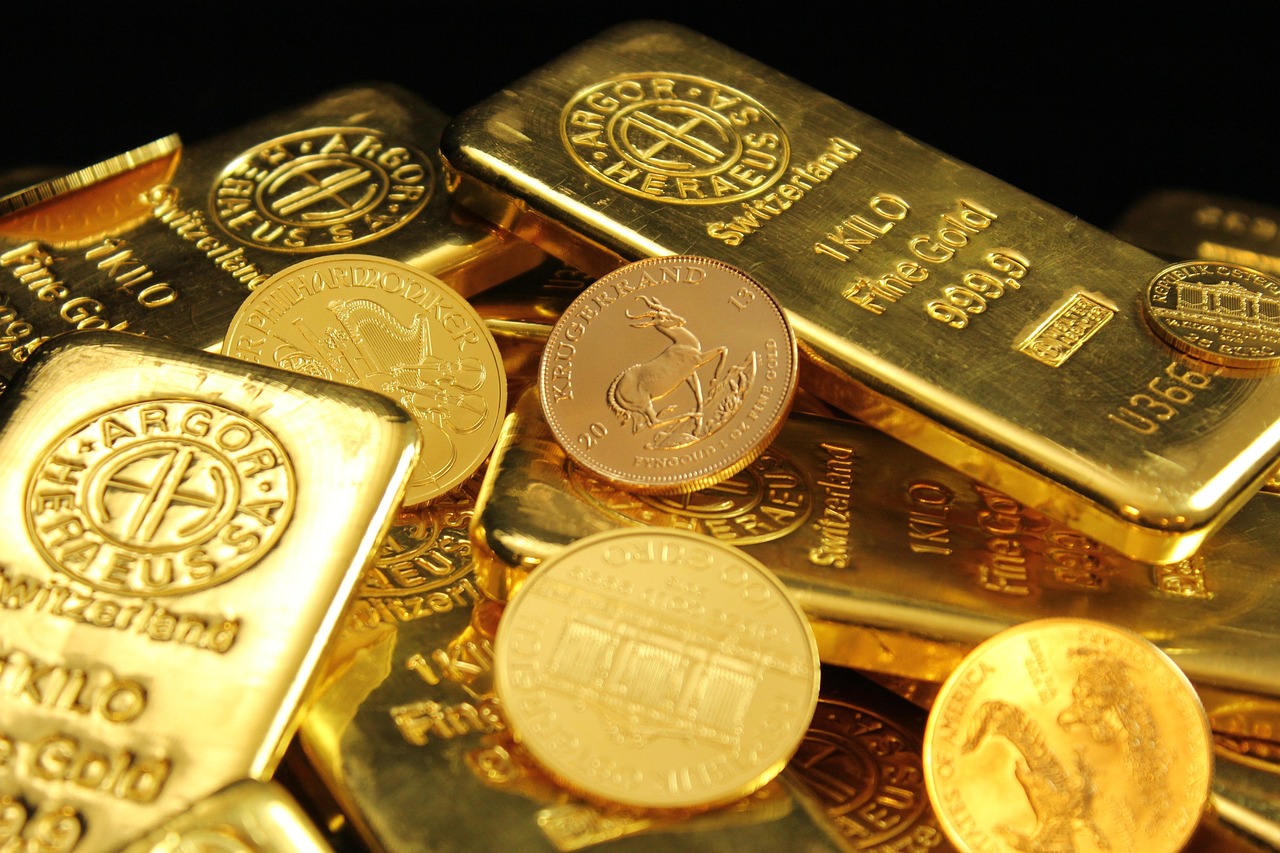
Gold and precious metals investments are entering a critical period as rising energy prices, uncertainty surrounding France’s public finances, and changing expectations for U.S. interest rates reshape the outlook for global financial markets. Gold traded around $4,180 per ounce on Tuesday, October 13, recovering modestly as oil prices and the U.S. dollar retreated from recent highs.
The rebound followed a difficult September in which gold declined 8.5%, pressured by rising Treasury yields and a stronger dollar. Yet the metal has remained above $4,000 per ounce, suggesting that demand for financial protection continues to provide support even as traditional economic conditions become less favorable.
The contrast is attracting growing attention from market strategists. Robin Brooks, a former chief foreign-exchange strategist at Goldman Sachs, has highlighted two developments that could dominate financial markets during the final quarter of 2026: the direction of oil prices and the possibility of a deeper debt crisis in France.
Both developments could have significant implications for gold, currencies, government bonds, and equities.
Higher oil prices threaten to keep inflation elevated and encourage central banks to maintain restrictive monetary policies. Meanwhile, deteriorating confidence in European government finances could increase demand for assets traditionally viewed as stores of value.
Related articles




For investors, the challenge is determining which force will prevail. Gold faces immediate pressure from high interest rates, but the broader economic environment may be creating conditions in which its defensive characteristics become increasingly valuable.
Gold’s $4,000 Price Floor Faces an Unexpected Challenge
Gold’s ability to remain above $4,000 per ounce has become one of the defining features of the precious metals market in 2026, particularly as government bond yields have climbed sharply.
Traditionally, higher interest rates create difficulties for gold because the metal does not generate interest income. When investors can earn attractive yields from government bonds, the opportunity cost of holding a non-yielding asset increases, often reducing demand.
That relationship helps explain gold’s September decline. According to the World Gold Council, prices fell 8.5% during the month to approximately $4,176 per ounce, while the U.S. 10-year Treasury yield increased by 53 basis points and the dollar strengthened.
The pressure continued into October as energy-related inflation concerns pushed bond yields higher. Gold futures declined to approximately $4,166 per ounce on October 12 before stabilizing during Tuesday’s trading.
However, an important development emerged beneath the price weakness. Global gold-backed exchange-traded funds attracted approximately $10 billion in inflows during September despite the monthly decline.
That divergence suggests that some institutional and individual investors continue accumulating gold even as short-term market conditions remain challenging. Their demand could reflect concerns about fiscal sustainability, geopolitical risks, and the long-term purchasing power of major currencies.
It also raises a central question for the gold price forecast: If substantial investment demand persists despite elevated interest rates, what happens when those monetary pressures eventually begin easing?
Oil Above $100 Could Become Gold’s Biggest Short-Term Obstacle
The recent surge in oil prices has complicated the outlook for gold and other financial assets.
Brent crude traded above $105 per barrel during October as geopolitical tensions and disruptions involving Middle Eastern energy infrastructure intensified concerns about global supply.
Higher energy prices can affect financial markets through several channels. They increase transportation and manufacturing costs, contribute to inflation, and reduce household purchasing power, potentially weakening economic growth.
For central banks, the problem becomes especially difficult when inflation remains elevated even as economic momentum deteriorates. Policymakers may face pressure to maintain higher interest rates despite the risks to businesses and consumers.
That scenario can initially be negative for gold.
If investors expect the Federal Reserve to maintain restrictive monetary policy, Treasury yields and the dollar may strengthen, increasing the opportunity cost of holding precious metals.
However, the longer-term relationship is less straightforward. A prolonged energy shock could eventually damage growth, weaken confidence in financial assets, and increase demand for portfolio protection.
Gold could therefore experience short-term selling pressure even as the economic conditions supporting its longer-term investment case become more pronounced.
Tuesday’s decline in oil prices provided a modest illustration of the opposing forces. As Brent crude eased and the dollar retreated from an 18-month high, gold found renewed support.
The next major test will be whether energy prices stabilize or another geopolitical shock reverses that improvement.
France’s Debt Troubles Could Give Gold a New Safe-Haven Catalyst
While oil prices dominate inflation concerns, France’s fiscal position has emerged as another source of uncertainty for global investors.
Political instability, elevated public debt, and concerns about government financing have increased pressure on French government bonds, contributing to wider yield spreads relative to German debt.
Those spreads are closely monitored because they reflect differences in the perceived credit and financial risks of euro-area governments.
A sustained widening could indicate that investors are demanding greater compensation for holding French sovereign debt, potentially affecting financing conditions across Europe.
The consequences would extend beyond France. European banks hold government securities and operate within financial markets that depend heavily on confidence in sovereign borrowers.
A prolonged deterioration could therefore increase volatility in banking shares, currencies, and regional bond markets.
Gold may benefit if investors respond by diversifying away from assets exposed to European financial uncertainty.
However, the outcome is not automatic. A sharp euro decline could strengthen the U.S. dollar, which may create competing pressure on dollar-denominated gold prices.
This tension makes France’s fiscal outlook particularly important. Gold could benefit from rising demand for financial protection while simultaneously facing headwinds from currency movements.
For investors, the question is whether safe-haven demand would outweigh the pressure created by a stronger dollar and higher global yields.
Central Bank Demand May Be Changing Gold’s Traditional Rules
One reason gold has remained relatively resilient is the growing importance of official-sector demand and reserve diversification.
Central banks hold gold alongside foreign currencies and government securities as part of their international reserves. Unlike a bond issued by another country, physical gold does not represent a direct claim on that government’s ability to repay its obligations.
That characteristic can become attractive when geopolitical tensions and concerns about financial sanctions increase.
Since the freezing of Russian foreign reserves in 2022, several central banks have placed greater emphasis on diversifying reserve assets, including through additional gold purchases.
The trend has contributed to a structural source of demand that may respond differently to interest rates than traditional private investment flows.
Research published in early October highlighted an unusually persistent premium in gold prices despite elevated U.S. bond yields. The analysis suggested that reserve diversification and geopolitical uncertainty have helped support valuations above levels that conventional interest-rate models might imply.
This does not mean that gold has become immune to monetary policy.
A stronger dollar and higher real yields can still cause significant price declines, as September demonstrated.
Nevertheless, sustained official-sector demand could make future corrections less predictable and provide additional support during periods of financial instability.
Gold Mining Stocks Could Amplify the Next Major Price Move
For investors seeking exposure through equities rather than physical bullion, gold mining stocks offer a different set of opportunities and risks.
Companies such as Newmont and Agnico Eagle generate revenue from extracting and selling precious metals, making their profitability sensitive to movements in gold prices.
When gold prices increase faster than operating expenses, miners can experience substantial margin expansion. This operating leverage may allow their earnings to rise by a larger percentage than the underlying metal.
The opposite can also occur.
Mining companies face substantial costs associated with energy, labor, equipment, transportation, and mine development. Rising oil prices can therefore increase operating expenses at precisely the moment geopolitical uncertainty is supporting demand for gold.
That creates an important distinction between owning bullion and owning gold mining shares.
Gold itself does not have a corporate balance sheet, operating costs, or management execution risks. Mining stocks, however, are exposed to production disruptions, regulatory requirements, debt levels, and capital spending decisions.
Investors who expect higher gold prices must therefore consider whether rising mining costs could offset part of the benefit.
The strongest financial results would generally occur when gold selling prices remain elevated while production expenses stay controlled.
For Newmont, Agnico Eagle, and other major producers, upcoming earnings reports could provide valuable evidence about whether the current gold price environment is translating into stronger cash generation.
Gold ETFs Offer Exposure Without Individual Mining Risks
Investors interested in the precious metals market can also consider exchange-traded funds, although different products provide substantially different types of exposure.
Physically backed gold ETFs, including SPDR Gold Shares (GLD) and iShares Gold Trust (IAU), are designed to track gold prices, less expenses, without requiring investors to arrange direct storage of bullion.
These products offer relatively straightforward exposure to movements in the metal itself.
Gold mining ETFs, such as VanEck Gold Miners ETF (GDX), instead hold shares of mining companies. Their performance depends on both gold prices and the profitability, valuation, and operating performance of the underlying businesses.
A rise in gold prices can support both categories, but mining ETFs may experience greater volatility because they carry equity-market and operational risks.
That distinction becomes especially important when financial markets are unsettled.
During a broad stock-market selloff, mining shares can decline alongside other equities even when gold prices remain comparatively resilient.
Investors should therefore avoid assuming that all gold-related investments provide identical defensive characteristics.
The appropriate exposure depends on whether the objective is tracking bullion prices, seeking potential corporate earnings growth, or diversifying existing portfolio risks.
Gold Price Forecast: Three Scenarios Could Shape the Next Move
The outlook for gold depends heavily on how energy prices, interest rates, and European fiscal conditions evolve during the final months of 2026.
The bullish scenario would involve persistent concerns about sovereign debt, renewed geopolitical uncertainty, and continued central bank or ETF demand. If Treasury yields stabilize while investors seek protection from financial instability, gold could regain upward momentum despite its recent correction.
The neutral scenario would see oil prices moderate and France avoid a more serious fiscal confrontation, while U.S. interest rates remain elevated. Gold could trade within a broad range as safe-haven demand offsets the opportunity cost of holding a non-yielding asset.
The bearish scenario would involve another surge in energy-driven inflation, stronger expectations for Federal Reserve tightening, and a further increase in real bond yields. A stronger dollar could add pressure, potentially pushing gold toward or below recent support levels.
These scenarios illustrate possible market outcomes rather than guaranteed price targets.
The Bottom Line: Gold’s Next Big Move May Depend on Two Global Risks
Gold enters the final quarter of 2026 at an important crossroads. Prices have weakened under pressure from rising Treasury yields and dollar strength, yet persistent investment inflows and concerns about global financial stability suggest that demand has not disappeared.
The direction of oil prices and France’s fiscal troubles could determine whether those competing forces intensify or begin to ease. At the same time, upcoming U.S. inflation data will help shape expectations for Federal Reserve policy and the cost of holding non-yielding assets.
For investors considering gold stocks, bullion ETFs, or mining companies, the most important indicators will be real interest rates, currency movements, central bank demand, energy prices, and the financial condition of major gold producers.
The latest market turbulence has demonstrated that gold is not immune to sharp corrections, even when geopolitical risks are elevated. But its ability to attract investment during difficult monetary conditions suggests that the underlying demand story remains significant.
Gold has already survived a major pullback while holding above $4,000. The next question is whether oil shocks and Europe’s growing debt worries will push the metal into another correction — or provide the catalyst for its next major rally.
Disclaimer
This article is for informational purposes only and does not constitute financial or investment advice. Readers should conduct their own research or consult a qualified financial advisor before making investment decisions. This article was researched and drafted with AI support and requires independent editorial review, fact-checking, and approval before publication.