SpaceX stock jumped Tuesday after Pivotal Research Group initiated coverage with a Buy rating and a year-end 2027 price target of $220, putting one of Wall Street’s newest mega-cap stocks back in the spotlight only three months after its blockbuster public debut. The bullish call implies roughly 43% upside from Tuesday afternoon levels around $154, but the most important part of analyst Jeffrey Wlodarczak’s thesis is not the target itself. Pivotal argues that SpaceX’s enormous valuation depends heavily on one engineering challenge: proving that Starship can be reused dozens of times with fast, inexpensive refurbishment between flights. If SpaceX solves that problem, launch economics could change dramatically. If it does not, Pivotal warns that SpaceX could ultimately be a much smaller company than today’s valuation assumes.
That makes the latest call unusually revealing for SpaceX stock. Investors are not merely being asked to bet that Starlink adds more subscribers or that Falcon 9 continues dominating commercial launch activity. The valuation increasingly assumes that Starship becomes something closer to an orbital transportation system than a traditional expendable rocket: huge payload capacity, rapid turnaround and repeated flights from the same vehicle. Pivotal’s model assumes individual Starships could eventually complete approximately 20 to 50 missions, potentially lowering orbital launch costs by more than 90% and opening markets that are economically difficult to serve with today’s launch technology.
The upside is enormous, but so is the dependency. SpaceX’s future in next-generation Starlink, orbital AI infrastructure and ultra-low-cost launch could all be tied to whether Starship becomes genuinely reusable rather than simply technically capable of reaching orbit. That is why the next several flight tests may matter to shareholders almost as much as quarterly earnings.
Pivotal’s $220 Target Is Really a Bet on Reusing the Same Rocket Again and Again
Pivotal’s investment thesis strips the SpaceX story down to a remarkably simple equation. Starship must eventually fly more like an aircraft than a conventional rocket. Wlodarczak argues that the current investment case at roughly a $2 trillion enterprise value rests predominantly on achieving rapid reusability, specifically the ability to conduct 20 to 50 flights with each Starship while keeping refurbishment costs and turnaround times low.
The economics explain why. Launching rockets has historically been extraordinarily expensive because major hardware is either discarded or requires substantial work before being flown again. SpaceX already transformed that model with Falcon 9 by routinely landing and reusing its first-stage boosters. Starship is supposed to push the concept much further by making both the enormous Super Heavy booster and the upper-stage spacecraft reusable.
Related articles





If SpaceX succeeds, Pivotal believes launch costs could decline by more than 90%. At that point, existing businesses such as Starlink would benefit because satellites could be deployed at dramatically lower cost, but entirely new markets could also become viable. Sending much larger quantities of computing equipment, power systems, satellites or industrial hardware into orbit becomes easier to justify when launch expense falls by an order of magnitude.
The danger is that technical reusability and economical reusability are not the same thing. A Starship that can technically fly twice but requires months of inspection and expensive replacement components between missions would fall well short of the vision embedded in Pivotal’s valuation. The real breakthrough comes when the same vehicle can fly repeatedly with minimal maintenance, and that remains the engineering milestone investors still need to see.
The Next Starship Test Suddenly Looks Like a Stock-Market Event
SpaceX is preparing for its 14th Starship test flight, potentially as soon as September 15. Regulatory filings referenced by Barron’s suggest the mission could attempt another major step forward, including what may become the Starship upper stage’s first full orbital insertion. The previous test successfully deployed 20 next-generation Starlink V3 satellites, providing evidence that the system is moving closer to operational usefulness rather than remaining solely an experimental rocket program.
SpaceX itself describes Starship as the world’s most powerful fully reusable rocket and has made development of the system a central part of its long-term strategy. The company’s recent public materials emphasize repeated testing as the critical path toward reliability, reflecting SpaceX’s long-standing philosophy of learning through actual flight rather than extended ground development.
For investors, however, each test now carries a new dimension. SpaceX was private during most of Starship’s early development, allowing failed test flights to remain primarily an engineering story. Since the company’s June IPO, those same tests can influence a publicly traded stock valued in the trillions of dollars.
A successful flight would not prove that Starship can achieve 50 rapid reuses. But each successful mission reduces technical uncertainty, while recurring setbacks could force investors to reconsider timelines that support aggressive long-term revenue assumptions. In that sense, the Starship test program has effectively become part of SpaceX’s quarterly investment thesis.
SpaceX’s IPO Already Priced In Enormous Expectations
SpaceX went public in June at $135 per share, issuing roughly 638.9 million Class A shares after the underwriters fully exercised their overallotment option. The IPO generated approximately $85.7 billion in net proceeds, making it one of the largest public offerings in market history. SpaceX said the proceeds would support expansion of AI computing infrastructure, launch facilities and vehicles, and its satellite constellations.
The scale of that fundraising illustrates how different SpaceX has become from a traditional aerospace company. It is simultaneously financing reusable launch vehicles, satellite communications, artificial-intelligence infrastructure and large-scale computing capacity. Those businesses can reinforce one another, but they also require extraordinary amounts of capital.
At around $154 on Tuesday, SpaceX stock is trading roughly 14% above its $135 IPO price. Pivotal’s $220 target would put the shares about 63% above the offering price, while Barron’s estimated that the analyst’s valuation would correspond to approximately a $3 trillion company.
That is why Starship matters so much. SpaceX does not simply need the rocket to work eventually. The company needs it to work well enough to support a valuation that assumes enormous future markets become financially accessible.
Starlink Could Be the First Huge Winner From Cheap Starship Launches
Starlink provides the clearest immediate example of how reusability could change SpaceX’s economics. The satellite network has already become a massive business, and SpaceX reported $7.8 billion of total second-quarter revenue, almost double the $4.1 billion generated a year earlier. Connectivity revenue drove much of the expansion, with Starlink reaching approximately 12 million subscribers.
The company plans to deploy roughly 1,000 next-generation Starlink V3 satellites within a year, according to Reuters. Those satellites can provide substantially more capacity than previous generations, but their size makes Starship particularly important because its payload bay and lifting capability allow SpaceX to deploy large numbers of advanced satellites efficiently.
Lower launch cost therefore creates a powerful feedback loop. SpaceX can deploy satellites more cheaply, add network capacity faster, attract additional Starlink subscribers and then use the resulting cash flow to finance further infrastructure expansion. Competitors that must purchase launches externally may struggle to replicate that vertically integrated model.
This is one reason Starship’s value cannot be judged solely by how much outside customers are willing to pay for launches. Some of its biggest economic benefits may appear inside SpaceX itself by lowering the cost of expanding businesses the company already owns.
AI Could Make Starship’s Addressable Market Even Bigger
The more speculative—and potentially much larger—part of the thesis involves artificial intelligence. SpaceX’s public filings now divide the company into space, connectivity and AI operations, and AI has already become a material revenue contributor. In the second quarter, AI Solutions & Infrastructure revenue reached roughly $2.19 billion, while SpaceX spent approximately $15.8 billion on AI infrastructure during the period.
Analysts are increasingly considering whether extremely cheap launch could eventually make space-based computing infrastructure economically viable. Data centers on Earth are constrained by land, grid connections, cooling requirements and electricity supply. Orbital computing introduces its own enormous technical problems, but dramatically lower transportation costs could make ideas that look unrealistic today much less absurd over the next decade.
Pivotal explicitly includes AI infrastructure among the markets that Starship could help unlock. The thesis is not that SpaceX will begin launching giant orbital data centers tomorrow, but that 90%-plus reductions in launch cost radically change the list of projects that can potentially generate acceptable returns.
This optionality matters because it gives SpaceX multiple ways to monetize Starship beyond NASA missions and conventional satellite launches. But it also makes valuation harder, since investors are effectively paying today for industries that may not exist at commercial scale for many years.
The Bull Case Is Powerful — but the Failure Case Is Unusually Clear
Pivotal’s initiation is bullish, but it also contains one of the clearest warnings surrounding SPCX stock. If SpaceX cannot achieve economical Starship reuse, the company’s long-term earnings power could look dramatically different from what a $2 trillion-plus valuation currently implies.
That risk extends beyond engineering. Starship must also receive regulatory approvals, operate reliably at high launch frequencies and avoid creating refurbishment costs that undermine the theoretical savings. SpaceX is also spending aggressively across AI infrastructure and other projects, meaning delays could force the company to consume capital for longer before the anticipated returns arrive.
Competition is developing as well. Blue Origin, Rocket Lab, Stoke Space and others are pursuing varying forms of reusable launch technology. SpaceX retains an enormous lead in operational experience, particularly through Falcon 9, but the size of the potential market guarantees that rivals will continue investing.
The valuation leaves little room for complacency. At lower prices, Starship might represent extraordinary optionality. At roughly a $2 trillion enterprise valuation, the market already expects SpaceX to convert much of that optionality into reality.
SpaceX Stock: The $220 Target Comes Down to One Question
The Pivotal Research call gives investors an unusually clean way to think about SpaceX. Starlink growth, AI infrastructure, launch dominance and new orbital businesses all matter, but Starship reusability is the mechanism that could make several of those businesses dramatically larger at the same time.
If SpaceX eventually flies individual Starships 20, 30 or even 50 times with rapid, inexpensive refurbishment, the economics of putting mass into orbit could change permanently. Starlink deployment becomes cheaper, large AI payloads become more plausible and launch capacity could expand far beyond what Falcon 9 can economically provide. In that scenario, Pivotal’s $220 target may not look particularly aggressive.
If Starship remains expensive to refurbish or fails to achieve high-frequency reuse, the story changes. SpaceX would still own Starlink, Falcon 9 and a formidable launch business, but the enormous markets investors are beginning to price into SPCX could take much longer to materialize—or never reach the scale bulls currently expect.
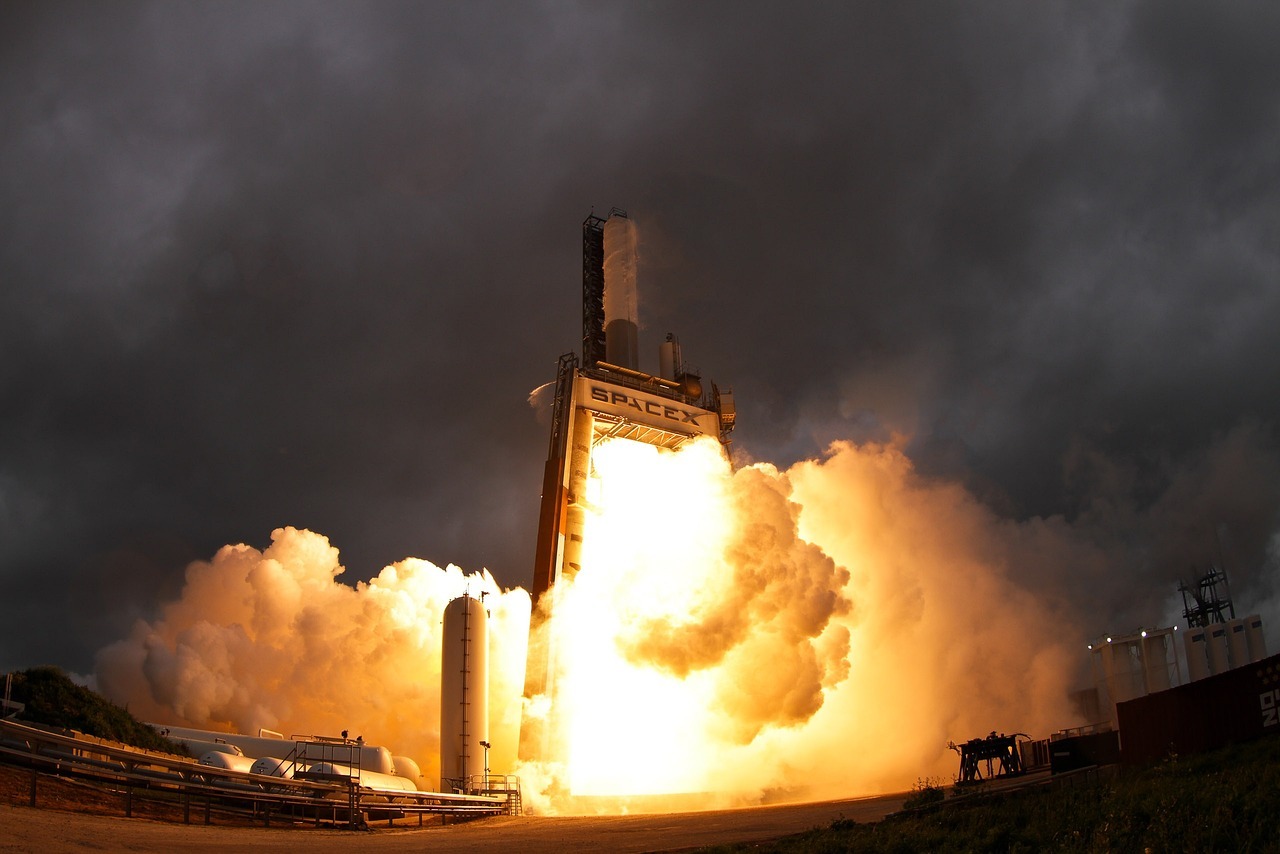
That is why the next Starship flights matter far beyond spectacular images of rockets launching from Texas. SpaceX has already proved that reusable rockets can work.
Now, with a multitrillion-dollar valuation on the line, it has to prove just how reusable they can become.
Disclaimer
This article is for informational purposes only and does not constitute financial or investment advice. Readers should conduct their own research and consider consulting a qualified financial advisor before making investment decisions. This article was researched and drafted with the support of AI, then reviewed, fact-checked and edited by the editorial team before publication.