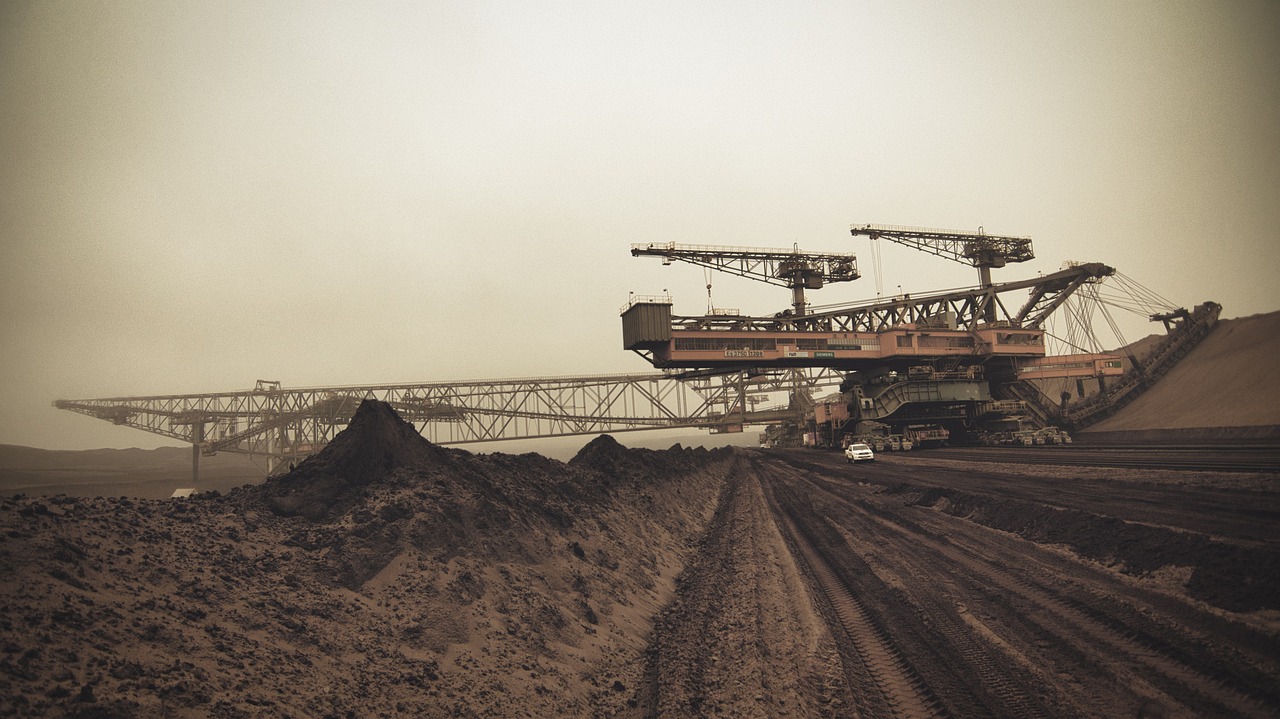
Rio Tinto is making a calculated move deeper into one of its strongest existing commodity franchises. The mining giant has agreed to acquire the Aurukun bauxite project in Queensland from Glencore and Mitsubishi Development, adding a large undeveloped resource close to Rio Tinto’s established Cape York operations. The purchase price has not been disclosed, and completion remains subject to Queensland Government and other Australian regulatory approvals. Aurukun is still at the development stage rather than an operating mine, but if it ultimately proceeds under the current concept, the project could extract up to 15 million tonnes of run-of-mine bauxite annually and produce as much as roughly 8 million dry tonnes of export bauxite per year.
For Rio Tinto stock, the significance is not that Aurukun suddenly transforms near-term earnings. It will not. The project still needs a mining lease, further approvals and potentially years of development work before meaningful production can begin. The attraction is strategic: Rio already owns major bauxite infrastructure around Weipa, understands the geology, operates an integrated global aluminium business and has repeatedly argued that long-term aluminium fundamentals are becoming more attractive as new supply gets more expensive and electricity costs rise. Aurukun potentially gives Rio another large, long-life source of raw material precisely where it already knows how to operate.
That makes this a classic Rio Tinto transaction: geographically familiar, operationally adjacent and potentially more valuable in Rio’s hands than it was as a standalone project. Yet there is an important complication. Aurukun has a long history of delays, regulatory work and community sensitivities, and Traditional Owners have already criticized the way the sale process was handled. The economics may look straightforward on a map, but getting the mine from acquisition announcement to production could prove much more difficult.
The Numbers Show Why Aurukun Is Too Big to Ignore
Queensland’s environmental assessment documents describe Aurukun as a proposed greenfield open-cut mine approximately 35 kilometres south of Weipa and 23 kilometres northeast of Aurukun on the Cape York Peninsula. The development concept calls for extraction of up to 15 million tonnes of run-of-mine bauxite per year, with screening and washing undertaken at an onsite beneficiation plant before product is hauled to a coastal loading facility for export. The project is designed around a roughly 25-year lifespan, including approximately two years of construction, and could support about 210 to 250 jobs during construction and 350 to 406 operational roles.
Scale alone makes that relevant for Rio. The company produced 62.4 million tonnes of bauxite on an attributable basis in 2025, up from 58.7 million tonnes in 2024. If Aurukun were eventually developed near its proposed capacity, it would represent a meaningful addition relative to Rio’s current portfolio rather than an incremental satellite project.
Related articles





The asset is also unusually well located for its new owner. Rio already operates the Weipa bauxite system on Cape York, including the Amrun mine, and existing project documents show that some infrastructure required for Aurukun intersects land covered by Rio Tinto mining leases. Glencore’s own environmental documentation noted that the former project owners had been discussing arrangements with Rio because haul-road and loading infrastructure would need consent where it crossed Rio-held areas. In other words, Rio was already an unavoidable neighbor before becoming the buyer.
That proximity is a major part of the investment logic. Mining projects often become more valuable when they can share roads, ports, technical expertise, logistics and an established workforce with nearby operations. Rio has not yet detailed how it would redesign or integrate Aurukun, but the geographic overlap creates opportunities that Glencore and Mitsubishi did not necessarily possess to the same extent.
Rio Tinto Is Buying Into a Commodity It Already Knows Extremely Well
Unlike a speculative move into a new mineral, Aurukun deepens Rio’s exposure to a commodity chain where it already has substantial scale. Bauxite is the raw material used to make alumina, which is then smelted into aluminium. Rio operates across that chain, with bauxite mines in Australia, alumina refining assets and aluminium smelting capacity across multiple regions.
The company’s 2025 annual report shows just how important that business has become. Rio’s aluminium and lithium segment generated $4.6 billion of underlying EBITDA, up from $3.6 billion a year earlier, while attributable aluminium production reached 3.38 million tonnes. Bauxite production, meanwhile, increased to 62.4 million tonnes.
Management has also made a relatively bullish long-term call on aluminium. Rio argues that the cost curve is steepening because new supply is increasingly being developed outside China at higher capital and electricity costs, a dynamic it believes supports stronger long-term pricing. That view matters because buying undeveloped bauxite today is effectively a bet on aluminium economics many years into the future.
Aurukun therefore fits into a broader portfolio strategy rather than standing alone. Rio is simultaneously investing heavily in copper, lithium and iron ore, but aluminium remains one of the businesses where it already owns a globally integrated position. Securing additional bauxite near existing operations can protect feedstock supply, create export flexibility and potentially strengthen the economics of the wider aluminium portfolio.
For shareholders, that is arguably more compelling than a headline-grabbing acquisition in an unfamiliar jurisdiction. Rio knows Cape York. The question is whether that familiarity will be enough to make a historically difficult project finally work.
The Deal Also Comes With a Curious Glencore Backstory
The transaction carries an unusual corporate twist because Rio Tinto and Glencore spent the beginning of 2026 exploring something far larger. In January, the two mining giants confirmed preliminary discussions around a potential combination that could have included an all-share merger. Those talks ended in February, when Rio said it no longer intended to pursue a deal after concluding that it could not reach terms that would deliver sufficient value for shareholders.
Seven months later, Rio is still buying a piece of Glencore—just a dramatically smaller one.
That contrast reinforces how selective Rio’s capital-allocation approach has become. Rather than absorbing Glencore’s sprawling global portfolio, Rio can acquire a specific project that fits directly beside assets it already owns. The price remains undisclosed, so investors cannot yet determine whether Rio secured Aurukun cheaply, but strategically the transaction is much easier to understand than a mega-merger involving dozens of businesses and jurisdictions.
Glencore had held a 70% interest in Aurukun, while Mitsubishi acquired the remaining 30% in 2021. At the time, Mitsubishi described the investment as its first move into bauxite mining, and the partners were still studying the project’s feasibility.
The fact that both sellers are now exiting suggests Aurukun still requires meaningful work before becoming an operating mine. Rio’s challenge will be to determine whether its infrastructure advantages and local expertise can unlock value that previous owners struggled to realize.
The Biggest Risk May Not Be Commodity Prices
Mining investors often focus first on commodity prices, capital expenditure and project returns, but Aurukun comes with a different category of risk that Rio cannot afford to underestimate.
The project is located on traditional Wik and Wik-Waya country, and some Traditional Owners have publicly criticized Glencore’s handling of the sale. The Australian reported that community members said they were informed after negotiations had already taken place and expressed frustration about being excluded from the process. Rio has said that, if the acquisition proceeds, it intends to work closely with Traditional Owners through the next stages of planning and development.
That issue carries particular weight for Rio Tinto because the company’s destruction of the Juukan Gorge rock shelters in 2020 triggered a major governance crisis, damaged relationships with Indigenous communities and contributed to the departure of senior executives. Any large Australian project involving culturally sensitive land is therefore likely to receive intense scrutiny from shareholders, regulators and communities.
Aurukun has not yet received a mining lease, even though its environmental impact assessment process has been completed. Queensland says the project remains classified as awaiting commencement, meaning Rio still faces a regulatory and consultation pathway before it can make a final development decision.
That does not make the project unviable. It does mean investors should resist treating 15 million tonnes per year as if production were already secured.
Why This Could Still Be a Smart Deal for Rio Tinto Stock
The strongest bull case is that Rio has acquired an asset whose strategic value is unusually high because of its location. A new entrant would need to build expertise, local relationships and infrastructure from scratch. Rio already has operating systems in Cape York and an existing bauxite export network, creating potential synergies that may not have been available to the previous owners.
The timing could also prove attractive if Rio’s long-term aluminium thesis is correct. Electricity-intensive aluminium production is facing rising costs in many regions, while decarbonization and industrial policy are increasing the strategic value of secure mineral supply chains. Bauxite itself is not a scarce niche commodity, but high-quality long-life resources in mining-friendly jurisdictions near established infrastructure can become increasingly valuable as development costs rise.
There is also portfolio logic. Rio’s recent results show that the company is trying to reduce its historical dependence on iron ore by growing copper, aluminium and lithium. In 2025, copper generated $7.4 billion of underlying EBITDA, while aluminium and lithium produced $4.6 billion. Aurukun would not transform that diversification overnight, but it pushes the portfolio another step toward a broader mix of materials tied to electrification and industrial demand.
The market reaction so far suggests investors are not treating the transaction as an immediate earnings catalyst. Rio Tinto shares traded about 0.9% lower at A$175.71 in Sydney on Tuesday, according to Alliance News, although a move of that magnitude is too small to attribute confidently to the acquisition alone.
That muted response may actually be appropriate. The real value of Aurukun will not be visible in this quarter’s earnings. It will be determined by the price Rio paid, the eventual development cost, regulatory progress and whether the project can be integrated efficiently with its Cape York network.
Rio Tinto Stock: Aurukun Could Be Worth More in Rio’s Hands Than Anyone Else’s
Aurukun is not the kind of acquisition likely to transform RIO stock overnight. There is no disclosed purchase price, no final investment decision, no mining lease and no production date. What Rio has bought is optionality: control over a large bauxite resource next door to one of its most important existing mining systems.
That is exactly why the transaction deserves attention.
The proposed mine could operate for roughly 25 years and extract as much as 15 million tonnes of bauxite annually. Rio already produces more than 60 million tonnes a year, already owns neighboring infrastructure and already believes aluminium’s long-term supply economics are improving. Those pieces make Aurukun a far more natural fit for Rio than it may have been for Glencore and Mitsubishi.
But the acquisition announcement is the easy part. Rio still has to secure approvals, build trust with Traditional Owners, determine the right development plan and prove that the economics justify committing billions of dollars over the project’s lifetime.
If it succeeds, Aurukun could become a decades-long extension of Rio Tinto’s aluminium franchise. If the regulatory, social or capital requirements prove too difficult, it could remain another large mineral resource that looks better on paper than in production.
For investors, that is the real question behind the deal: Rio Tinto has just bought a huge strategic option on future aluminium supply. Now it has to prove it can unlock it.
Disclaimer
This article is for informational purposes only and does not constitute financial or investment advice. Readers should conduct their own research and consider consulting a qualified financial advisor before making investment decisions. This article was researched and drafted with the support of AI, then reviewed, fact-checked and edited by the editorial team before publication.