
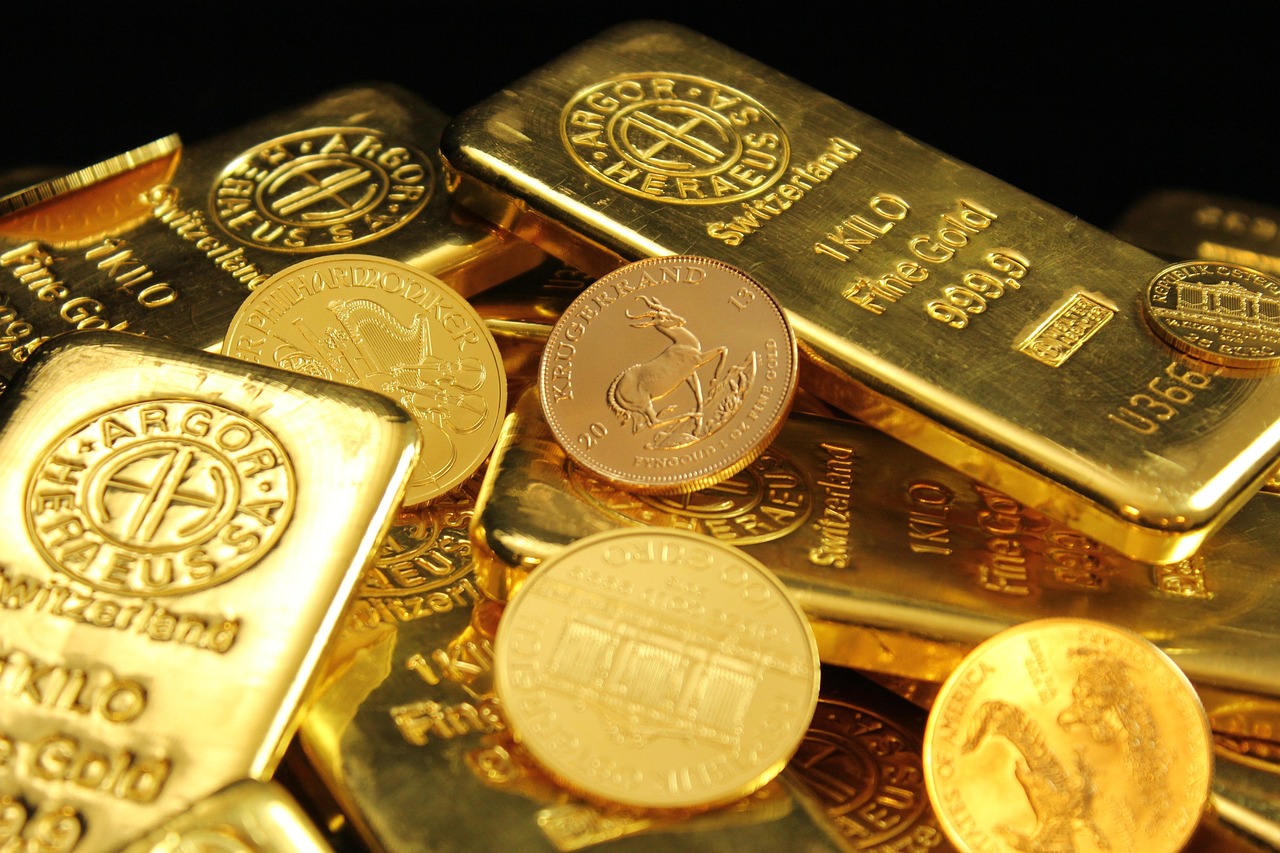
Gold prices rebounded more than 1% on Thursday, September 3, with spot bullion trading around $4,435 an ounce as falling Treasury yields and a weaker U.S. dollar helped revive the rally. RBC Capital Markets now argues that gold is positioned to resume its move toward $5,000 this year, with strategist Christopher Louney pointing to geopolitical instability, de-dollarization, fiscal concerns and persistent central-bank demand as forces that could overpower the short-term drag from higher interest rates.
The timing of RBC’s call is important because gold has just experienced one of its sharpest corrections in months. Prices fell more than 2% on September 1 and briefly dropped toward a one-month low as U.S. bond yields surged and traders increased bets on another Federal Reserve rate hike. Thursday’s recovery therefore puts investors at a critical crossroads: either the recent selloff was a temporary reset inside a powerful structural bull market, or the combination of higher real yields and tighter monetary policy will prevent gold from making another run at record highs.
RBC’s Gold Price Forecast 2026 Puts $5,000 Back on the Table
RBC’s Christopher Louney expects gold to spend much of the remainder of 2026 between roughly $4,500 and $5,000 an ounce, with a longer-term target around $5,300 by the end of 2027. His thesis is not built around a single catalyst such as one Federal Reserve meeting or one geopolitical crisis. Instead, RBC sees a combination of persistent uncertainty, diversification away from the U.S. dollar and concerns about currency debasement and fiscal stability encouraging investors to maintain or rebuild strategic gold exposure.
Louney’s broader 2026 forecast published through the London Bullion Market Association projected a trading range of approximately $3,704 to $5,108, with an average price around $4,427. He argued that the path of least resistance remained higher and that gold was more likely to spend the second half of 2026 toward the upper end of his scenario range. Importantly, RBC also expects central-bank demand and strategic investor flows to remain relatively sticky rather than behaving like short-term speculative trades.
That distinction matters. Gold does not necessarily need an immediate Federal Reserve rate cut to reach $5,000 if investors and reserve managers continue increasing allocations for reasons that have little to do with short-term monetary policy.
Related articles





Gold Price Today: The Rally Is Trying to Recover
Spot gold rose more than 1% on September 3 to around $4,434.70 an ounce, while U.S. futures climbed toward $4,480. The recovery followed a brutal stretch in which bullion dropped more than 3% after Federal Reserve Chair Kevin Warsh’s hawkish Jackson Hole comments and then fell another 2% on September 1 as Treasury yields and the dollar strengthened.
The immediate catalyst for Thursday’s rebound was a decline in U.S. bond yields and a softer dollar. Weaker private-employment data also shifted attention toward Friday’s nonfarm payrolls report, which could influence whether the Fed raises rates later this month. Markets were still assigning roughly a 62% probability to a September rate increase on Thursday, meaning the interest-rate threat has not disappeared.
Gold investors are therefore trading an unusually unstable mix of signals. Lower yields and a weaker dollar support bullion, but inflation remains elevated and oil prices are still above $90 a barrel because of renewed U.S.-Iran tensions. If energy costs keep inflation sticky, the Fed may remain under pressure to tighten even as labor-market data soften.
That tension is likely to keep gold volatile even if RBC’s longer-term thesis proves correct.
Central Banks Remain One of Gold’s Strongest Supports
The most powerful structural argument behind the bullish gold price forecast 2026 remains central-bank demand.
The World Gold Council reported that central banks purchased a net 289 tonnes of gold during the second quarter, five times the revised Q1 amount and a record level of buying for a second quarter. Poland remained the largest reported buyer during the first half of 2026, adding approximately 82 tonnes, followed by Uzbekistan at 41 tonnes, China at 40 tonnes and Kazakhstan at 27 tonnes.
Those purchases are important because central banks are usually not attempting to time quarterly price moves. Their buying reflects longer-term reserve-management decisions, including diversification, geopolitical risk management and concern about excessive dependence on any single currency or sovereign asset.
RBC’s de-dollarization argument fits directly into that trend. Gold is unique among major reserve assets because it is not the liability of another government or financial institution. That characteristic has become increasingly valuable as geopolitical sanctions, fiscal stress and international tensions encourage some countries to diversify their foreign-exchange reserves.
Central-bank buying slowed during the first quarter but accelerated dramatically in Q2, suggesting that lower prices may actually attract additional official-sector demand rather than undermine the thesis.
Gold ETF Flows Are the Missing Piece of the $5,000 Bull Case
Institutional investment demand has been less consistent.
The World Gold Council reported that gold-backed ETFs experienced 45 tonnes of outflows during the second quarter. North American investors were particularly sensitive to rising inflation expectations, higher interest rates and a stronger dollar, although first-half global ETF demand remained modestly positive at 18 tonnes. Global gold ETF holdings ended June at approximately 4,047 tonnes with assets under management of roughly $526 billion.
This may be the most important potential catalyst behind RBC’s call.
If ETF investors begin rebuilding positions while central banks continue buying, gold could face simultaneous demand from both strategic reserve managers and financial-market participants. That combination was a major driver during earlier phases of the rally.
Conversely, continued ETF outflows would make a move toward $5,000 more difficult, especially if the Federal Reserve keeps interest rates high.
RBC’s thesis essentially assumes that uncertainty, de-dollarization and concerns about currency purchasing power eventually become powerful enough to pull investment capital back into gold even if yields remain relatively restrictive.
The Fed Is Still the Biggest Obstacle to $5,000 Gold
The most obvious challenge to RBC’s bullish view is monetary policy.
Markets dramatically increased expectations for another Fed hike after Warsh said policymakers still had more work to do on inflation. The U.S. 10-year Treasury yield recently reached its highest level in roughly 19 months, while longer-dated yields moved toward multi-year highs. Higher yields normally hurt gold because bullion pays no interest and must compete with bonds and cash for investor capital.
The next major data point is Friday’s U.S. payroll report. A strong employment number could reinforce expectations for a September rate hike and potentially send yields and the dollar higher again. A weak report could reduce the probability of tightening and provide another immediate catalyst for bullion.
Reuters cited analysts who said softer employment data could push gold toward $4,500 and potentially $4,700. That would bring the market significantly closer to RBC’s $5,000 scenario without requiring an immediate change in the longer-term structural backdrop.
Investors should therefore distinguish between the short-term trading setup and the long-term bull thesis. RBC may ultimately be right about $5,000 while gold still experiences violent corrections along the way.
Geopolitical Instability Is Keeping Safe-Haven Demand Alive
The conflict between the United States and Iran remains another major variable.
Oil markets continue to reflect concern about potential disruption to Middle Eastern supply, with Brent crude trading around $95 a barrel on Thursday and U.S. crude above $90. Shipping through the Strait of Hormuz has also remained below normal levels, reinforcing uncertainty about one of the world’s most important energy routes.
Gold has not always rallied immediately on every escalation because higher oil prices can simultaneously increase inflation and push bond yields higher. RBC has previously noted that this dynamic can temporarily limit gold’s safe-haven response.
However, the firm argues that prolonged uncertainty can ultimately support bullion even when the first market reaction is dominated by energy prices and interest rates. In other words, the longer geopolitical instability persists, the greater the probability investors decide they remain underallocated to a traditional hedge such as gold.
That is another reason the $5,000 target cannot be evaluated solely through the Fed.
Gold Demand Remains Enormous Even Near Record Prices
The broader gold market continues to show substantial resilience.
Total gold demand, including over-the-counter transactions, reached 1,269 tonnes during the second quarter and 2,522 tonnes in the first half of 2026. The volume was only modestly higher year over year, but the dollar value of first-half demand reached a record $380 billion because prices remained dramatically above prior-year levels.
High prices are hurting jewellery consumption, particularly in major markets such as China and India, but investment and central-bank demand have increasingly taken over as the major drivers of the market.
That change in demand composition matters for investors evaluating whether gold has become too expensive. Jewellery buyers naturally reduce purchases when prices rise sharply, but institutional investors and central banks may react very differently if higher prices coincide with greater political or financial uncertainty.
Gold can therefore become more expensive without automatically destroying the demand supporting the rally.
Is Gold Still a Buy Below $5,000?
The bull case remains compelling but far from risk-free.
Gold has strong structural support from central-bank buying, reserve diversification, geopolitical instability and concerns about government debt and currency purchasing power. RBC’s forecast also suggests that strategic demand may matter more than short-term fluctuations in interest rates during the second half of the year.
The bearish case is equally straightforward. If U.S. payroll growth remains strong, inflation stays elevated and the Federal Reserve raises rates again, Treasury yields could return to recent highs and the dollar could strengthen. That combination recently sent gold down more than 5% within only a few sessions.
For investors, the most important lesson is that the road toward $5,000 is unlikely to be smooth.
Gold has repeatedly demonstrated that it can suffer violent corrections without destroying the longer-term thesis.
Outlook: $5,000 Is Possible, but Friday’s Jobs Report Comes First
RBC’s target puts gold within roughly 13% of $5,000 from Thursday’s spot price, making the number far less extreme than it would have appeared only a year ago. Central banks continue adding bullion, geopolitical uncertainty remains high and strategic diversification away from traditional reserve assets provides a long-term source of demand.
The immediate battle, however, remains the Federal Reserve.
Investors should watch Friday’s payroll report, upcoming inflation data, Treasury yields and the September Fed decision. ETF flows will also be critical because renewed institutional buying could provide the additional demand needed to push bullion decisively back toward its highs.
For now, gold has survived another violent interest-rate shock and is already attempting to recover.
RBC believes the march toward $5,000 is ready to resume. The next few weeks will reveal whether the latest correction was simply the pause bulls needed—or the warning that higher rates can still derail even one of the strongest gold markets in decades.