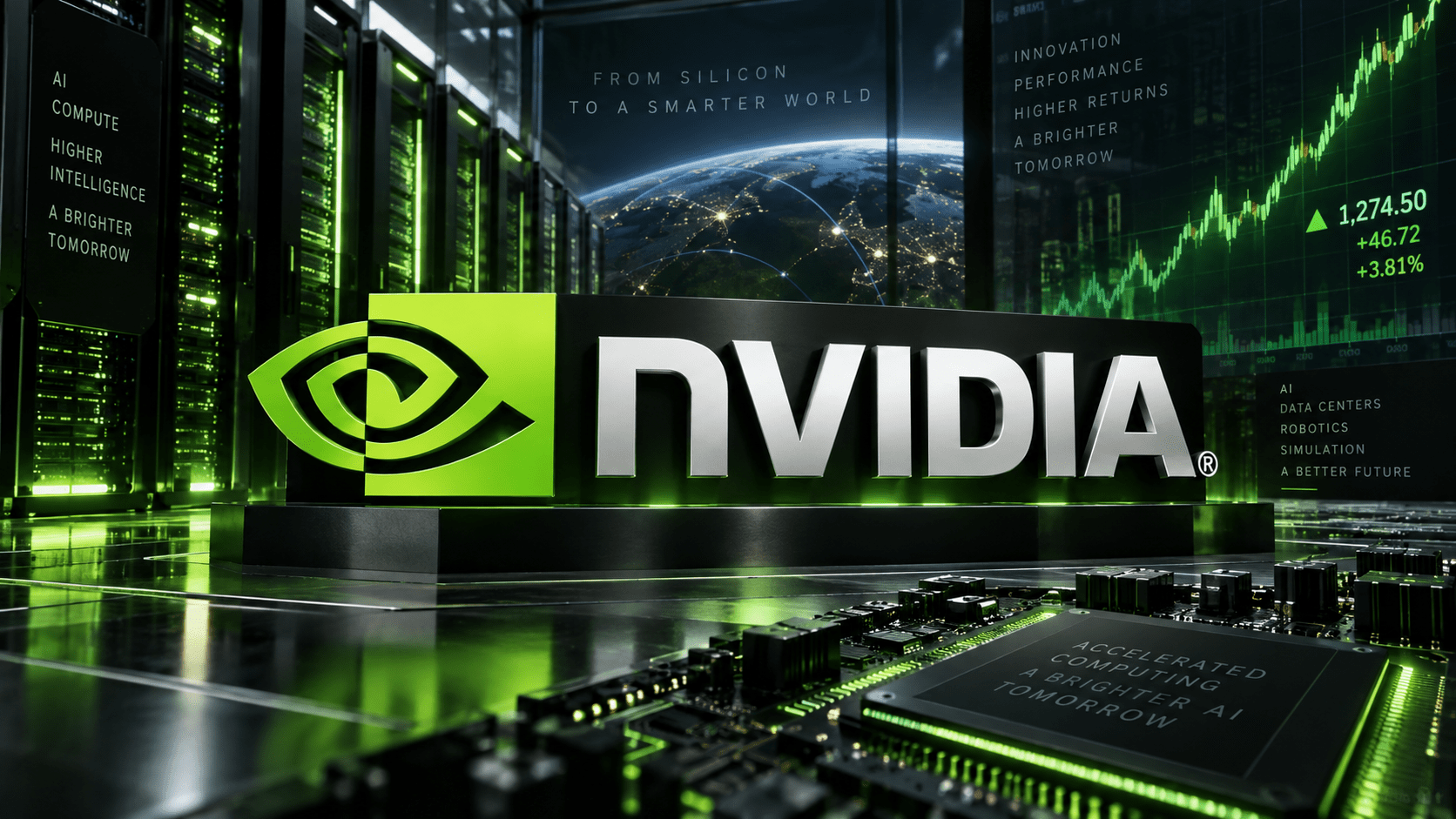
Nvidia (NASDAQ: NVDA) just delivered one of the biggest displays of financial firepower in corporate history, yet it was not enough to pull the semiconductor sector out of a sharp Monday selloff. The AI chip giant increased its share repurchase authorization by a record $150 billion, lifting its remaining buyback capacity to $235 billion through fiscal 2028. Nvidia stock rose roughly 2% to 3% following the announcement, but the broader Philadelphia Semiconductor Index fell about 2.6%, exposing a striking divide between confidence in Nvidia’s cash-generating machine and growing nervousness across the rest of the technology market.
The timing makes the announcement particularly significant. Nvidia has spent years at the center of the artificial intelligence investment boom, supplying the GPUs and increasingly broad computing infrastructure behind enormous data-center expansion. Now, despite continuing to invest heavily in future products and AI infrastructure, management is signaling that the company expects to generate enough cash to return extraordinary amounts of capital to shareholders at the same time.
Yet Monday’s market reaction delivered a warning that even $150 billion cannot completely overpower the forces currently pressuring technology stocks. Oil prices surged as hopes for a near-term resolution of the U.S.-Iran conflict weakened, pushing Treasury yields higher and reviving fears that persistent energy inflation could force interest rates to remain elevated. Nvidia managed to swim against that tide, but much of the semiconductor industry did not.
That leaves investors with an intriguing question: is Nvidia’s record buyback simply an enormous vote of confidence in its own business, or does the contrast between NVDA and the rest of the chip sector reveal something more important about where the AI trade is heading?
Nvidia Just Authorized a Buyback Bigger Than Most S&P 500 Companies
The sheer size of Nvidia’s new authorization is difficult to ignore. The additional $150 billion surpasses Apple’s $110 billion authorization announced in 2024, making Nvidia’s increase the largest single expansion of a share repurchase program on record, according to Reuters. Combined with the company’s existing authorization, Nvidia now has approximately $235 billion available for repurchases that it expects to use through fiscal 2028.
Related articles





To put that figure into perspective, Reuters reported that the $150 billion increase alone exceeds the market capitalization of roughly 84% of the companies in the S&P 500. Nvidia is effectively reserving enough capital for share repurchases to rival the entire equity value of hundreds of major American corporations.
The announcement is particularly notable because Nvidia is not behaving like a mature technology company with few places left to invest. The company remains in the middle of an aggressive product cycle and continues pouring money into computing infrastructure, networking, software and future AI architectures. At the same time, its customers are investing enormous sums in the data centers required to deploy those systems.
CEO Jensen Huang framed the buyback as evidence that Nvidia can pursue both priorities simultaneously. He said the company’s cash generation provides sufficient capacity to invest in technologies advancing the AI transformation while also returning capital to shareholders. That distinction matters because the buyback would carry a very different message if Nvidia were sacrificing future investment to fund it. Instead, management is presenting the repurchase program as a consequence of the extraordinary cash flows being produced by the AI boom.
Nvidia’s Cash Machine Is Making the Buyback Possible
The buyback becomes easier to understand when viewed alongside Nvidia’s recent financial performance. Demand for AI training and inference infrastructure has turned the company into one of the world’s most powerful cash generators, giving management financial flexibility that would have seemed extraordinary even a few years ago.
Nvidia returned a record $26 billion to shareholders during its fiscal second quarter of 2027, including approximately $20 billion through share repurchases and another $6 billion through its quarterly dividend. The company also reported GAAP and non-GAAP gross margins of approximately 75%, despite continuing to spend heavily on compute infrastructure and preparations for future products.
Nvidia ended the July quarter with approximately $22.44 billion in cash and cash equivalents, according to Reuters. The company had already announced an $80 billion repurchase authorization in May before adding another $150 billion only months later. That rapid expansion demonstrates just how aggressively Nvidia is prepared to return capital while the AI infrastructure cycle continues generating exceptional profits.
There is also a valuation argument behind the move. Nvidia shares were trading at approximately 16.5 times expected earnings over the next 12 months when the new authorization was announced, according to LSEG data cited by Reuters. That was the stock’s lowest forward earnings multiple since January 2015 and far below its 15-year average of around 30 times earnings.
That does not automatically make Nvidia stock inexpensive, because valuation depends heavily on whether future earnings estimates prove accurate. But the combination of powerful cash generation and a sharply lower earnings multiple helps explain why management may view repurchases as an attractive use of excess capital.
Then Something Strange Happened: Chip Stocks Sank Anyway
If Nvidia’s announcement was designed to make a statement about financial confidence, the stock itself initially responded accordingly. Nvidia shares climbed roughly 2% during Monday trading, with Seeking Alpha reporting a gain closer to 3% earlier in the session. The rest of the semiconductor market, however, was moving sharply in the opposite direction.
The Philadelphia Semiconductor Index fell approximately 2.6%, showing that Nvidia’s record-breaking announcement was not powerful enough to lift sentiment across the industry. The broader technology market was also under pressure as investors confronted another jump in energy prices and Treasury yields.
The selloff followed a very different environment only a week earlier, when enthusiasm surrounding artificial intelligence had propelled several semiconductor names sharply higher. AMD had surged nearly 10% on September 21, while Intel gained roughly 12% and Arm jumped more than 17% as excitement around AI inference renewed optimism about demand for computing infrastructure.
Monday’s reversal therefore highlights how quickly investor sentiment can change. The long-term AI spending story may remain powerful, but semiconductor valuations are still exposed to interest rates, energy prices, geopolitics and changing expectations about the enormous capital expenditures required to build AI infrastructure.
That broader macroeconomic pressure helps explain why Nvidia could rally on company-specific news while semiconductor stocks collectively moved lower.
Oil Prices Just Became a Problem for the AI Trade
The immediate pressure on technology stocks came from a seemingly unrelated market: crude oil.
Oil prices jumped roughly 3% toward $107 per barrel on Monday after President Donald Trump rejected an Iranian proposal aimed at ending the conflict, although negotiations were expected to continue. Rising crude prices pushed longer-dated Treasury yields to fresh multi-decade highs as investors reconsidered the inflation outlook. At midday, the Dow Jones Industrial Average was down 0.74%, the S&P 500 had fallen 0.83% and the Nasdaq Composite was nearly 1% lower.
For semiconductor investors, the connection matters. Technology companies whose valuations depend heavily on future earnings can become particularly sensitive to changes in interest rates. Higher bond yields increase the discount rate applied to those future profits, potentially placing pressure on valuations even when underlying business demand remains healthy.
The AI investment boom adds another dimension. Building enormous data centers requires vast quantities of electricity, construction equipment, networking hardware and financing. Persistently high energy prices and borrowing costs could make that infrastructure increasingly expensive at precisely the moment technology companies are committing unprecedented amounts of capital to it.
Those concerns do not mean AI spending is about to collapse. They do, however, illustrate why strong company-specific developments are no longer guaranteed to lift the entire semiconductor sector.
The $150 Billion Question: What Is Nvidia Signaling?
A buyback of this scale sends several potential signals to investors, but none should be interpreted in isolation. Repurchasing shares can reduce the number of shares outstanding over time, potentially increasing earnings per share if profits remain unchanged or continue growing. It can also indicate that management believes returning capital is attractive relative to alternative uses of cash.
In Nvidia’s case, the announcement arrives while investors are increasingly debating how long the extraordinary AI infrastructure cycle can continue. Years of explosive spending by hyperscalers and technology companies have produced extraordinary demand for Nvidia hardware, but maintaining that growth becomes mathematically harder as the company becomes larger.
Nvidia attempted to address those concerns last month when it forecast roughly 70% revenue growth for fiscal 2028, according to Reuters. The enormous buyback authorization adds another signal that management remains confident in the company’s ability to generate substantial cash even while funding future development.
However, an authorization does not mean Nvidia will immediately spend all $235 billion. Repurchases can occur over time, and the actual pace will depend on management decisions, market conditions and the company’s other capital requirements. Investors should therefore distinguish between the headline authorization and the eventual number of shares Nvidia actually purchases.
AI Spending Is Still Booming, but Investors Are Asking Harder Questions
The broader market environment suggests investors are becoming more selective about the AI trade. One indication is emerging in corporate credit markets, where buyers have become increasingly cautious about the flood of debt associated with AI infrastructure.
Reuters reported last week that hyperscaler debt issuance is projected to reach approximately $420 billion next year, a 60% increase from 2026. Spreads on AI-related corporate debt have widened as investors demand greater compensation for financing companies associated with the enormous infrastructure buildout. The concern is not necessarily that the largest technology companies cannot repay their debts, but rather that the scale and frequency of AI-related borrowing are making investors more selective.
That shift matters for Nvidia because its extraordinary growth ultimately depends on customers continuing to spend heavily on AI infrastructure. Nvidia can produce the world’s most advanced accelerators, but sustained demand requires cloud providers, governments, enterprises and AI companies to continue building computing capacity.
For now, management is signaling that it sees considerable runway ahead. The market, however, is increasingly demanding evidence that the enormous sums invested in artificial intelligence can produce sufficient economic returns.
Nvidia Stock Is Winning Monday’s Battle, but the Semiconductor War Is Bigger
Nvidia’s record $150 billion increase to its share repurchase authorization is an extraordinary demonstration of the financial power created by the AI boom. With $235 billion of remaining buyback capacity through fiscal 2028, strong cash generation and a forward earnings multiple near its lowest level in more than a decade, the company is sending a clear message about its confidence in its ability to invest and return capital simultaneously.
Yet Monday’s market action also shows why investors cannot evaluate Nvidia in isolation. While NVDA advanced, the broader semiconductor index fell sharply as rising oil prices, higher Treasury yields and renewed inflation concerns pressured technology stocks. The divergence suggests that company-specific strength can coexist with growing caution around the broader AI and semiconductor trade.
The next phase of the story will therefore depend on more than Nvidia’s buyback. Investors will be watching whether AI infrastructure spending continues expanding at the pace management expects, whether hyperscalers can justify their increasingly enormous capital expenditures and whether higher energy prices and interest rates begin changing the economics of data-center investment.
Nvidia has just placed $150 billion behind its own financial confidence. The more important question for markets is whether the rest of the AI ecosystem can remain confident enough to keep spending.
Disclaimer
This article is for informational purposes only and does not constitute financial or investment advice. Readers should conduct their own research or consult a qualified financial advisor before making investment decisions. This article was researched and drafted with the support of AI, but was reviewed, fact-checked, and edited by the editorial team before publication.