
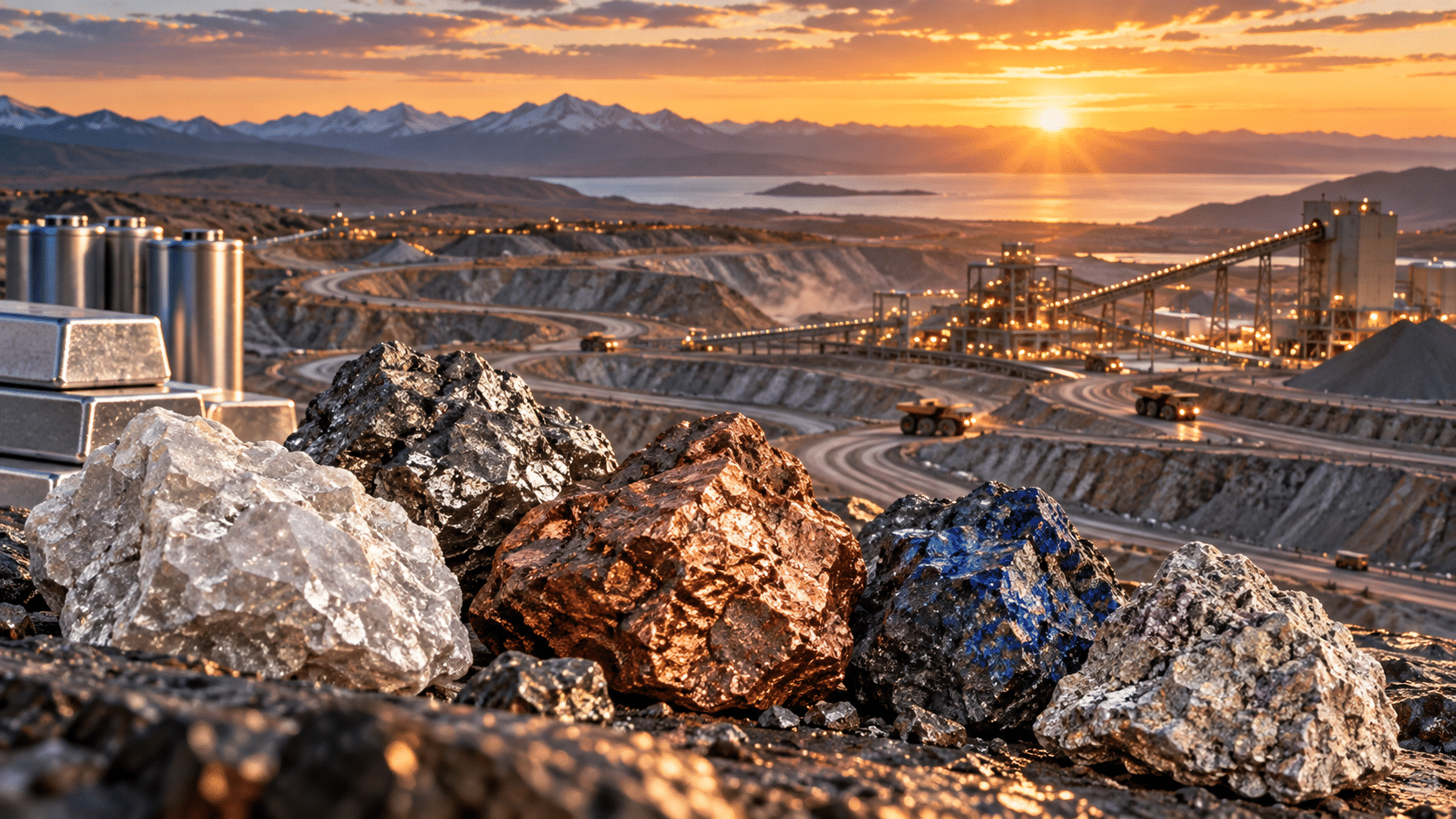
The United States is investing billions of dollars in an ambitious effort to reduce its dependence on China for critical minerals, accelerating a global competition for resources essential to defense systems, electric vehicles, semiconductor manufacturing and advanced technology. Washington has expanded government financing, taken stakes in strategically important companies and launched a multibillion-dollar mineral stockpiling initiative. Yet despite these investments, China continues to control much of the global rare earth supply chain, raising questions about how quickly the United States can achieve greater mineral independence.
The scale of the US critical minerals investment campaign reflects growing concerns about the economic and national security consequences of relying on a geopolitical competitor for strategically important materials. China’s dominance extends beyond mining into refining, processing and magnet manufacturing, giving Beijing considerable influence over industries that depend on reliable access to these resources. Recent export restrictions have demonstrated how quickly that dependence can create problems for American manufacturers, prompting Washington to accelerate its efforts to establish alternative supply chains.
However, the challenge is considerably more complicated than financing additional mines. Building a competitive mineral industry requires processing facilities, specialized manufacturing technology, qualified workers and reliable customers. Even as American production expands, industry estimates suggest the country will remain dependent on imported rare earth materials well into the next decade. The financial stakes extend across the global economy, potentially affecting manufacturing costs, commodity markets, international trade and investment in advanced technologies.
Washington’s Multibillion-Dollar Strategy Is Reshaping the Minerals Industry
The United States has dramatically expanded its financial involvement in the critical minerals industry as it attempts to establish more secure domestic and allied supply chains. According to Reuters, the federal government has committed tens of billions of dollars to nearly 150 companies involved in mineral extraction, processing and related activities. These investments reflect a broader strategy of supporting industries considered essential to economic competitiveness and national security.
Rather than relying exclusively on traditional subsidies, Washington has increasingly combined government financing with private-sector investment and strategic procurement arrangements. This approach aims to address one of the industry’s biggest obstacles: the substantial capital required to develop mining and processing projects before they can generate commercial revenue. Government involvement can reduce financing uncertainty, accelerate construction and encourage private investors to participate in projects that might otherwise struggle to attract sufficient funding.
Related articles





One of the most significant initiatives is Project Vault, a proposed $12 billion strategic mineral reserve supported by approximately $10 billion in financing from the Export-Import Bank of the United States and $2 billion in private investment. Unlike conventional emergency stockpiles, the initiative is designed to help American manufacturers maintain access to critical minerals during supply disruptions or periods of extreme market volatility. Its purpose is to provide an additional layer of protection while domestic and allied production capacity continues to develop.
The initiative reached an important milestone on September 23, when commodity trading companies Glencore and Mercuria became its first major commercial participants. Together, the companies committed $1 billion to help procure and stockpile critical minerals, moving the project closer to becoming an operational reserve. Their participation demonstrates how Washington is attempting to combine public financing with established international commodity trading networks rather than building an entirely government-operated supply system.
For the broader economy, these developments represent a significant change in how the United States approaches strategic resources. Instead of assuming that global markets will always provide reliable access to essential materials, Washington is investing directly in the infrastructure and inventories needed to reduce its exposure to international supply disruptions.
China’s Control Extends Far Beyond Mining Minerals
Although the United States is accelerating investment, China’s established position in global mineral supply chains presents a substantial challenge. According to estimates cited by Reuters, China controls up to 70% of global rare earth mining, approximately 85% of refining capacity and around 90% of rare earth metal alloy and magnet production. Its influence extends to other critical minerals, including lithium, cobalt and graphite, where Chinese companies also control substantial refining capacity.
The distinction between mining and processing is particularly important because extracting minerals represents only the first stage of a complex industrial supply chain. Rare earth elements must undergo specialized separation and refining processes before manufacturers can transform them into the magnets and other components used in advanced technologies. China has spent decades developing these capabilities, establishing integrated production networks that combine industrial expertise, manufacturing infrastructure and economies of scale.
Consequently, discovering additional mineral deposits or opening new American mines will not automatically eliminate dependence on Chinese suppliers. The United States must also establish commercially viable processing facilities, expand magnet manufacturing and develop the specialized workforce required to operate these industries. Each stage involves considerable investment, technical challenges and lengthy development periods, explaining why greater mineral independence cannot be achieved through mining expansion alone.
The implications extend across numerous industries. Automakers require rare earth magnets for electric motors, defense manufacturers depend on specialized materials for advanced weapons systems, and technology companies rely on critical minerals throughout their manufacturing operations. Disruptions at any stage of the supply chain can therefore affect production schedules, manufacturing costs and the availability of finished products.
America’s Production Is Growing – Numbers Reveal a Persistent Gap
Washington’s investment campaign is beginning to produce measurable results, although the latest industry estimates illustrate how far the United States remains from establishing a comprehensive domestic rare earth supply chain.
According to Benchmark Mineral Intelligence data reported by Reuters on September 24, American production of the two most commonly used rare earth elements has more than tripled since early 2025. Despite that expansion, the United States can currently satisfy only approximately 42% of its domestic demand. The consultancy estimates that the country will still depend on imports for nearly one-quarter of its requirements five years from now.
These figures highlight the difference between increasing production and achieving supply chain independence. Although American companies are expanding their operations, demand from defense manufacturers, automakers and other industrial customers remains substantial. Building sufficient capacity across the entire production process will require sustained investment and reliable access to materials that cannot yet be produced domestically in adequate quantities.
Several companies are responding by expanding their activities beyond traditional mining. USA Rare Earth has pursued acquisitions involving mineral deposits and processing facilities, while Energy Fuels has sought to strengthen its position in downstream manufacturing. Other businesses are developing alternative refining technologies intended to improve efficiency and reduce dependence on established Chinese processing methods.
Nevertheless, the commercial success of these initiatives remains uncertain. New facilities must achieve consistent production, meet demanding customer specifications and operate at costs that make their products competitive. Government financing can accelerate development, but it cannot eliminate the technical and economic challenges associated with creating an industrial supply chain.
China’s Export Controls Have Turned Critical Minerals Into a Trade Negotiation Priority
The strategic importance of critical minerals has become increasingly apparent in trade relations between Washington and Beijing. Chinese export restrictions have demonstrated how supply chain concentration can influence international negotiations, particularly when American manufacturers have limited access to alternative suppliers.
The consequences are already visible in international trade data. According to Chinese customs figures reported by the Financial Times, China’s rare earth magnet exports to the United States declined to approximately 512 tonnes in August, representing a 13% decrease compared with the previous year and a 20% decline from July. The reduction reinforced concerns about the reliability of international supplies and the potential economic consequences of additional restrictions.
The issue has consequently become an important component of negotiations between the world’s two largest economies. American officials have sought more reliable access to Chinese rare earth exports, while Beijing has raised concerns about American restrictions affecting advanced technologies. Both governments face economic considerations because changes in trade conditions can affect manufacturers, exporters and consumers.
However, diplomatic agreements cannot immediately resolve the underlying concentration of mineral production and processing. Even if export restrictions are relaxed, American manufacturers would remain exposed to future disruptions until alternative suppliers establish sufficient commercial capacity.
This explains why Washington is pursuing diplomatic negotiations and domestic industrial investment simultaneously. Maintaining access to existing international suppliers can help manufacturers meet immediate requirements, while expanding domestic and allied production offers the possibility of reducing supply chain vulnerabilities over a longer period.
A Looming 2027 Deadline Exposes the Scale of the Challenge
The urgency surrounding America’s critical minerals strategy is increasing as a January 1, 2027, defense procurement deadline approaches. Restrictions affecting certain minerals and magnets sourced from China and other designated countries are intended to reduce reliance on potentially vulnerable supply chains. However, American producers have struggled to develop sufficient domestic capacity ahead of the deadline.
Reuters reported in July that the United States produced approximately 300 metric tons of rare earth magnets in 2025, compared with domestic consumption of roughly 48,000 metric tons. The enormous difference illustrates the difficulty of replacing established international suppliers within a relatively short period.
Although the restrictions apply to specified defense procurement activities rather than all American industrial consumption, their implementation could create additional challenges for manufacturers dependent on materials that remain difficult to source domestically.
The approaching deadline also highlights the importance of international partnerships. Developing supply chains involving allied countries could provide additional manufacturing capacity and access to mineral resources while American facilities continue expanding. Such arrangements may help diversify supply risks without requiring the United States to produce every essential material domestically.
Ultimately, the practical challenge involves balancing procurement restrictions against the immediate material requirements of strategically important industries.
The Economic Consequences Could Extend Across Global Manufacturing
The competition for critical minerals carries financial implications that extend considerably beyond the mining industry. As governments invest in alternative supply chains, manufacturers may face changes in material prices, procurement arrangements and production costs.
Establishing new processing and manufacturing facilities requires substantial capital expenditure, while operating costs may differ significantly between established Chinese producers and emerging competitors. Companies seeking to diversify their suppliers may therefore need to balance the benefits of greater supply security against potentially higher short-term expenses.
For automakers, battery manufacturers and advanced technology companies, these considerations could influence investment decisions and long-term production strategies. Reliable access to essential materials can help reduce the risk of manufacturing interruptions, but developing alternative suppliers may require new commercial agreements and additional investment.
Commodity markets could also experience structural changes as governments accumulate strategic reserves and support domestic production. Project Vault, for example, introduces an additional source of demand for selected minerals while creating inventories intended to provide protection during supply disruptions. Its eventual market impact will depend on the materials purchased, the scale of procurement and the conditions under which inventories become available.
However, government investment also introduces financial uncertainty. Changes in public spending priorities, industrial incentives and procurement requirements can influence project economics. Companies developing new facilities must therefore consider whether sufficient commercial demand will exist independently of government support.
Can the United States Reduce Its Dependence on China?
America’s multibillion-dollar critical minerals campaign is beginning to reshape investment across mining, refining and advanced manufacturing. New production facilities, strategic mineral reserves and international partnerships are creating alternative sources of supply, while government financing is helping projects overcome some of the industry’s substantial development costs.
Nevertheless, the latest production figures demonstrate that reducing dependence on China will remain a lengthy process. China’s established processing infrastructure, manufacturing expertise and integrated supply chains provide substantial advantages that cannot be replicated immediately through additional investment.
The coming years will reveal how effectively American companies can expand production, develop competitive processing technologies and establish reliable commercial relationships. Progress will also depend on international cooperation, commodity market conditions and the ability of governments to maintain consistent industrial policies.
For the global economy, the consequences extend beyond the relationship between Washington and Beijing. More diversified mineral supply chains could improve resilience across industries that depend on advanced technologies, while continued concentration would leave manufacturers exposed to international trade disruptions.
The United States has committed substantial financial resources to changing that equation. Whether those investments can establish commercially sustainable alternatives will determine how quickly the country reduces its exposure to Chinese mineral supplies.
For now, the central challenge remains unchanged: building mines is only the beginning. Establishing the processing capacity, manufacturing infrastructure and commercial networks needed to compete with China’s established mineral industry will take considerably longer.
Disclaimer
This article is for informational purposes only and does not constitute financial or investment advice. Readers should conduct their own research or consult a qualified financial advisor before making investment decisions. This article was researched and drafted with AI assistance and requires editorial review, fact-checking and editing before publication.