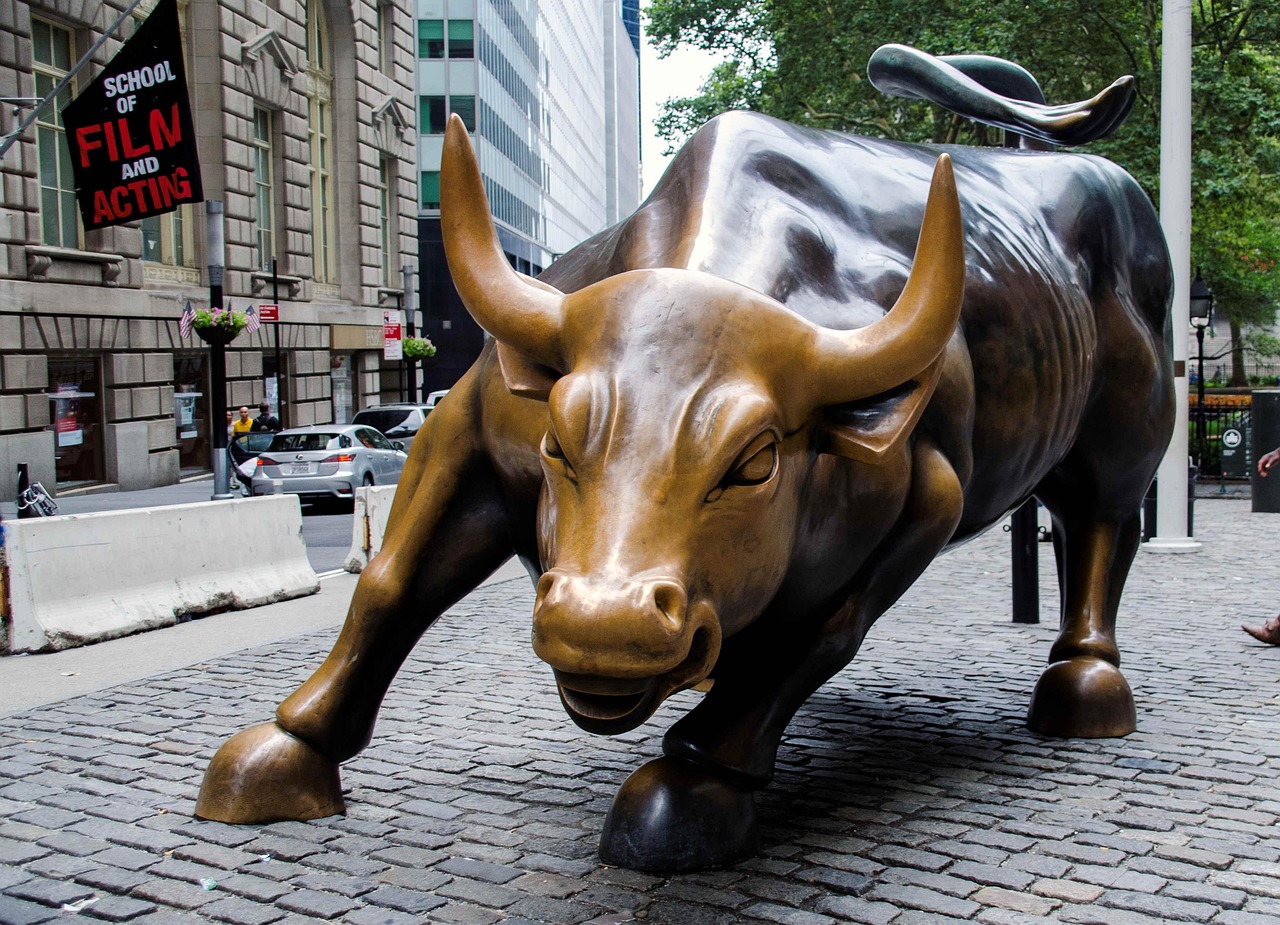
Goldman Sachs says the violent rotation out of crowded artificial-intelligence trades is beginning to stabilize, while powerful corporate earnings continue to support the broader bull market. The call arrives after a volatile July for technology stocks, but Friday’s rebounds in Nvidia, Microsoft, and Meta suggest investors are not abandoning AI – they are demanding clearer evidence that enormous spending will translate into profits.
For investors weighing the latest S&P 500 forecast, the message is encouraging but not risk-free. Earnings growth remains unusually strong, hedge funds are still making money from the AI boom, and capital is rotating into new sectors rather than fleeing equities altogether. Yet elevated valuations, concentrated index exposure, interest-rate uncertainty, and punishing single-stock volatility mean the next leg higher may look very different from the easy mega-cap rally that powered previous gains.
Goldman Sachs’ S&P 500 Forecast Rests on Earnings, Not Hype
Goldman’s constructive view centers on one critical distinction: recent AI volatility does not necessarily signal a collapse in the fundamental investment thesis.
The bank’s strategists have argued that the latest pullback resembles a “healthy reset” in an overcrowded trade. Hedge funds sharply reduced technology exposure after momentum reversed, but Goldman’s prime-brokerage analysis indicates that managers remain fundamentally bullish on AI-related companies.
That distinction matters because crowded trades can unwind even when the underlying businesses remain healthy. When too many investors own the same semiconductor, cloud-computing, memory, or data-center stocks, a relatively small disappointment can trigger forced selling, deleveraging, and algorithmic momentum reversals.

Goldman’s July market outlook nevertheless remained constructive on U.S. equities, citing consensus expectations for second-quarter S&P 500 earnings per share to rise 22% year over year. The bank also highlighted projected 9% earnings growth for the median index company, suggesting the profit expansion is broader than the largest technology names alone.
That is the foundation of Goldman’s bullish case. A market supported by rising earnings can absorb periodic valuation compression far better than a rally driven only by speculative multiple expansion.
AI Stocks Just Survived a Brutal Stress Test
The AI trade has not been calm.
In early July, systematic hedge funds suffered their worst stretch in almost a year as crowded positions and volatile chip stocks produced sharp losses. Goldman estimated that quant managers had surrendered roughly one-quarter of their year-to-date gains, with returns falling to 10.8% from 14.4% on June 22.
Fundamental stock pickers were also hit. Goldman said those managers fell 2.2% during the disruption and aggressively exited AI-linked positions, pushing hedge-fund leverage to its lowest level in a year.
Those figures initially looked ominous. Forced deleveraging can become self-reinforcing: falling prices trigger risk reductions, which generate more selling, which then produces additional volatility.
But the unwind also removed some of the market’s most dangerous positioning excesses. By late July, Goldman described the episode as a reset rather than a wholesale loss of confidence.
That interpretation gained support from Friday’s market action. Nvidia closed at $200.75, up roughly 3%; Microsoft finished at $464.72, also up about 3%; and Meta rose around 3.2% to $556.71. The simultaneous rebound across chips, cloud infrastructure, and digital advertising indicated that buyers were returning selectively after recent turbulence.
One strong session does not settle the debate. However, it shows that investors are still willing to buy leading AI beneficiaries when earnings and valuations appear attractive enough.
The AI Boom Is Moving Beyond Nvidia
The market’s AI story is no longer limited to one chipmaker or even one technology subsector.
Goldman’s hedge-fund research shows that professional investors have repeatedly rotated through different stages of the AI supply chain. Funds initially concentrated on semiconductor “picks and shovels,” then shifted toward power infrastructure and data centers, and more recently moved decisively into memory stocks.
That rotation is crucial for the wider AI stocks outlook. It suggests the theme is evolving rather than disappearing.
The first phase rewarded companies selling accelerators and advanced processors. The next phase increasingly focuses on memory capacity, networking equipment, cooling systems, electrical infrastructure, utilities, software adoption, and businesses capable of turning AI investment into measurable revenue.
This broadening creates opportunity, but it also raises the bar. Investors are no longer rewarding every company that adds “AI” to an earnings call. They want accelerating cloud demand, higher utilization, improved productivity, stronger margins, or credible evidence of future cash flow.
That is why earnings reactions have become so violent. Strong headline revenue is not always enough when capital expenditure is enormous and market expectations are already embedded in premium valuations.
Hedge Funds Are Still Betting on the AI Trade
Despite the summer shakeout, hedge-fund performance provides powerful evidence that institutional confidence has not disappeared.
Global hedge funds returned an average of 7% in the first half of 2026, comfortably above their 10-year first-half average of 4.1%, according to a Goldman report reviewed by Reuters. It was the sixth consecutive half-year period in which returns exceeded the long-run average.
Equity long-short funds performed even better, gaining an average of 12.9%. Goldman attributed that result to unusually strong stock-picking conditions, including high single-stock volatility and low correlation between individual shares.
Technology, media, telecommunications, and consumer-focused funds were among the major beneficiaries of the AI trade. Their performance nearly doubled from the comparable period a year earlier.
Allocator demand also remains robust. Goldman surveyed 341 investors overseeing more than $1.5 trillion in hedge-fund assets and found that nearly half planned to increase exposure during the second half of 2026. Only 3% expected to reduce it.
That does not mean hedge funds are blindly buying technology. It means volatile, dispersive markets are creating opportunities for managers to separate winners from losers.
For retail investors, the implication is clear: the next phase of the AI bull market may reward selectivity more than passive exposure to every perceived beneficiary.
Strong Earnings Are Keeping the Bull Market Intact
The strongest argument behind Goldman’s S&P 500 forecast is that corporate profits remain resilient.
Goldman Sachs Asset Management expects AI investment to keep supporting robust earnings while the rally broadens into other areas of the market. The firm has highlighted infrastructure, industrials, energy security, and defense as potential beneficiaries of increased public and private spending.
The market is also receiving support from areas outside technology. Financial stocks strengthened in July following solid bank earnings, improving capital-markets activity, benign credit trends, and renewed merger and initial-public-offering activity. The S&P 500 financial sector reportedly gained 6.3% during the month, becoming the index’s second-best-performing sector behind energy.
Goldman has identified additional themes with relatively low correlation to the AI complex. These include consumer-experience companies, high-quality “compounders,” and potential merger targets.
The bank says its compounder basket contains companies with strong earnings growth, high returns on capital, healthy balance sheets, and reliable free-cash-flow conversion. The median company in that group reportedly grew earnings per share more than twice as quickly as the median S&P 500 constituent over the previous three years.
Meanwhile, announced U.S. merger activity reached $1.2 trillion as of July 17, up 32% from the comparable 2025 period. Goldman expects dealmaking to remain strong in the coming months.
This is what a broadening bull market looks like: money does not leave stocks—it moves toward industries with improving earnings, lower valuations, or fresh catalysts.
The Biggest Risk Is Still Market Concentration
The bullish case has an uncomfortable weakness: the S&P 500 remains heavily dependent on a small number of enormous companies.
Goldman Sachs Asset Management estimates that the 10 largest U.S. companies represent roughly 40% of the index. The Magnificent Seven alone account for approximately 29% of S&P 500 market capitalization and 28% of index earnings.
Strong profits can justify concentration, but they cannot eliminate risk. A disappointing earnings report from one mega-cap company can erase billions of dollars in market value and drag the entire index lower.
Concentration also makes the index more sensitive to interest rates. Technology and other long-duration growth stocks derive a large portion of their valuation from profits expected far into the future. When bond yields rise, the present value of those earnings falls.
The result is a market that can remain fundamentally healthy while still suffering sudden 5% to 10% corrections.
Investors should therefore distinguish between a broken bull market and a volatile bull market. Goldman’s current argument supports the latter.
What Could Break the Bullish S&P 500 Forecast?
Three threats could challenge the outlook.
First, hyperscalers must prove that AI capital expenditure is producing durable revenue growth. If cloud providers continue spending tens of billions of dollars without demonstrating improving returns, investors may punish both the buyers of AI infrastructure and the suppliers selling it.
Second, interest rates remain a major valuation risk. Persistent inflation, higher energy prices, or a more restrictive Federal Reserve could lift discount rates and pressure expensive growth stocks.
Third, earnings expectations themselves may be too optimistic. A 22% rise in S&P 500 profits sets a demanding standard. Even companies that beat analysts’ forecasts can fall if their guidance implies deceleration.
There is also a market-structure risk. Goldman has described a backdrop of high single-stock volatility, low correlation, and elevated concentration. That environment is attractive for stock pickers, but it can be treacherous for leveraged investors and momentum strategies.
Outlook: What Investors Should Watch Next
The evidence currently supports Goldman’s view that the AI trade is stabilizing rather than collapsing. Earnings remain strong, hedge-fund demand is resilient, and leadership is broadening into financials, industrials, infrastructure, memory, and merger candidates.
Investors should now monitor hyperscaler spending guidance, semiconductor orders, cloud growth, profit-margin trends, bond yields, and whether the median S&P 500 company continues delivering earnings growth.
The bull market may still be intact—but its next winners could be hiding far beyond the stocks that started the AI frenzy.