
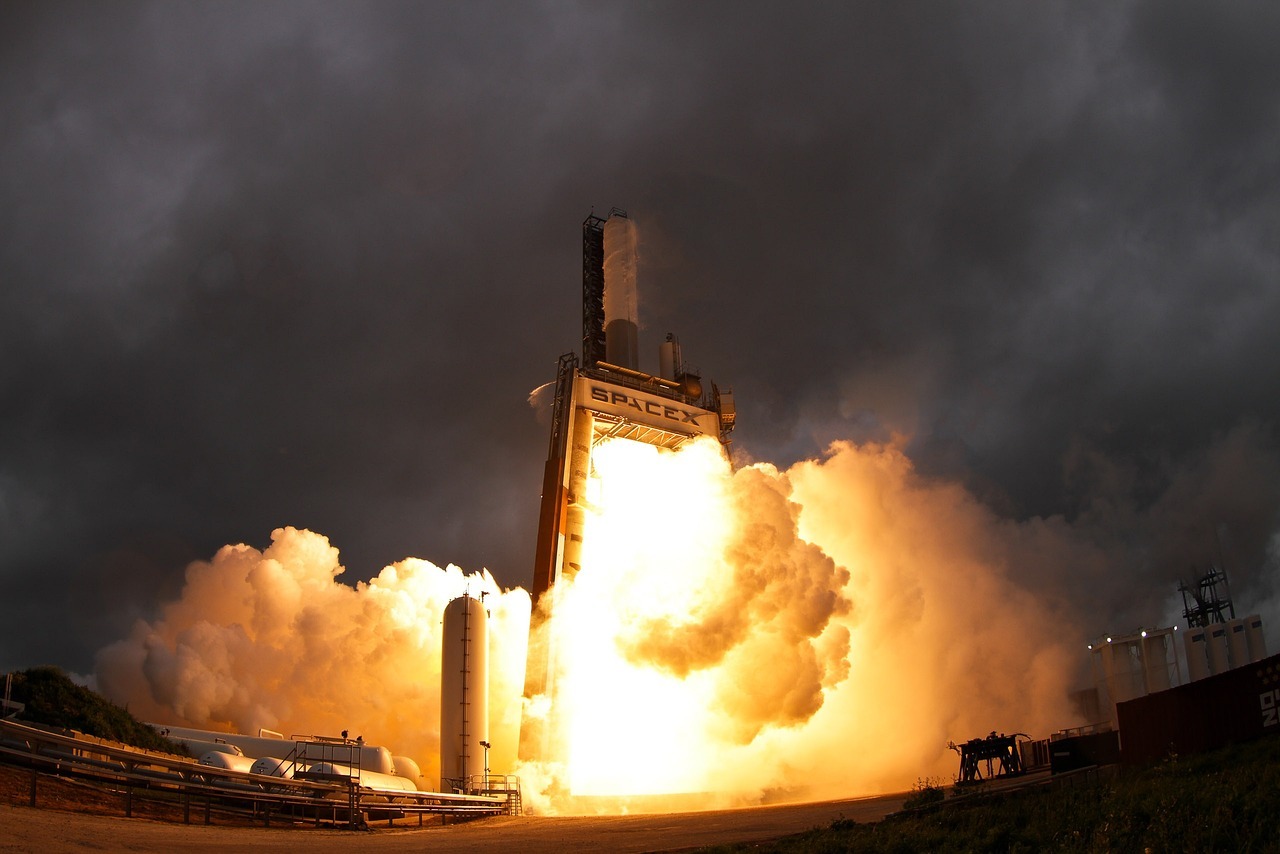
SpaceX shares extended their post-IPO decline after the company aborted Starship’s 13th flight test only moments before liftoff, adding operational uncertainty to an already difficult period for the newly public stock.
The launch was automatically stopped at SpaceX’s Starbase facility in South Texas after several of the Super Heavy booster’s 33 Raptor engines failed to start correctly. The engines began their ignition sequence but shut down before the rocket left the launch platform. SpaceX CEO Elon Musk said two engines would be replaced and indicated that another attempt could take place early the following week.
SPCX stock declined by approximately 3% in after-hours trading following the abort, with shares falling to around $131.11. That placed the stock below its $135 initial public offering price for the first time and marked another setback after its powerful June debut.
The aborted flight did not destroy the vehicle, and the automatic safety system appears to have worked as intended. Nevertheless, the event reinforced investor concerns about Starship’s development timetable, the capital required to complete the program and the demanding assumptions embedded in SpaceX’s valuation.
Why the Starship Launch Was Aborted
The launch sequence was halted less than a second before liftoff after four Raptor engines failed to ignite, according to reporting on the test. The rocket’s onboard systems responded by shutting down the remaining engines while the booster was still secured to the launch mount.
Related articles





A pad abort is materially different from a failure after launch. The rocket remained on the ground, limiting the risk of vehicle loss, debris and damage to surrounding infrastructure. The event may therefore prove to be a relatively short technical delay rather than a major program failure.
However, investors will want to know why multiple engines failed to start and whether the problem is limited to individual hardware or connected to a wider issue involving the ignition sequence, fuel systems or booster design.
Starship’s 13th test was expected to carry 20 next-generation Starlink satellites. Some of those spacecraft were equipped with cameras intended to examine the rocket’s heat shield during flight. The mission was designed to test both satellite deployment and improvements introduced following earlier Starship flights.
A successful retry would reduce concern that the abort indicates a deeper technical problem. Additional postponements could place greater pressure on investor confidence.
SpaceX Shares Are Now Below the $135 IPO Price
SpaceX priced its initial public offering at $135 per share and listed its Class A stock on Nasdaq under the ticker SPCX. The offering documents indicated that more than 555 million shares were being sold at the IPO price.
The shares initially surged following the listing, eventually reaching a peak of approximately $225.64. At that level, SpaceX briefly carried a market value approaching $3 trillion. By July 16, the stock had fallen to $131.11, reducing the company’s valuation to roughly $1.74 trillion.
Trading below the IPO price is psychologically important because it places initial public investors at an unrealized loss. The $135 level may also become a closely watched technical resistance point during any rebound.
The decline does not necessarily mean that investors have lost confidence in SpaceX’s long-term businesses. It may instead reflect a reassessment of the premium applied during the first days of public trading.
Newly listed stocks can experience unusually large price moves because there is limited public trading history, relatively little quarterly financial information and intense disagreement over valuation. SpaceX’s combination of aerospace operations, Starlink connectivity and speculative future projects makes the company particularly difficult to value using conventional methods.
Why Starship Matters to the SpaceX Valuation
Starship is central to several of SpaceX’s most ambitious growth plans.
The fully reusable launch system is intended to carry substantially heavier payloads than the Falcon 9 while potentially reducing the cost of reaching orbit. That capability could allow SpaceX to deploy larger Starlink satellites, complete lunar missions, launch commercial payloads and eventually support missions to Mars.
Starship is also important to NASA’s Artemis program. NASA has selected SpaceX to develop a lunar landing system based on Starship for future crewed missions to the Moon. Delays in testing could therefore affect both SpaceX’s internal roadmap and government program schedules.
The rocket’s expected payload capacity is particularly relevant to Starlink. Larger satellites may provide greater bandwidth and support new services, but launching them efficiently depends on Starship becoming reliable and operational.
Investors have also assigned potential value to longer-term concepts involving orbital computing and AI infrastructure. Those projects remain highly uncertain and would require dependable heavy-lift launches, large amounts of capital and technological advances beyond the current Starship test program.
Analyst valuation scenarios vary widely because so much of SpaceX’s potential future value depends on successful Starship deployment. Recent analyst cases have ranged from deeply bearish outcomes near $75 per share to highly optimistic forecasts several times the current stock price.
A Short Delay May Not Change the Long-Term Story
Launch aborts are part of aerospace testing, particularly for a vehicle as large and technically complex as Starship.
The system’s ability to stop the launch before liftoff demonstrates that its safety mechanisms detected the engine problem and prevented the booster from leaving the pad under abnormal conditions. From an engineering perspective, identifying the issue on the ground is preferable to discovering it during flight.
Musk’s indication that another launch could occur early the following week suggests that the initial assessment did not identify catastrophic vehicle damage.
A successful test within days could help restore confidence. Investors may view the incident as a routine development delay if the replacement engines perform normally and SpaceX completes the major flight objectives.
The risk is that inspections uncover a broader problem requiring additional redesign or testing. Starship has already undergone numerous hardware and software changes as SpaceX works toward reliable operation. Each delay increases development expenses and pushes potential commercial revenue further into the future.
Valuation Remains the Larger Risk for SPCX Stock
The launch abort arrived while SpaceX shares were already under pressure, suggesting that the stock’s weakness cannot be attributed entirely to one technical event.
SpaceX’s peak valuation required investors to assume rapid Starlink growth, improving launch economics and successful commercialization of Starship. When those expectations are extremely high, even temporary setbacks can produce an outsized stock reaction.
Starship development has reportedly required more than $15 billion of investment, with additional spending expected before the system becomes commercially mature.
The company must continue funding rocket development, satellite manufacturing, ground infrastructure and Starlink expansion. These capital requirements could keep free cash flow under pressure even if revenue rises rapidly.
Investors should therefore distinguish between SpaceX’s competitive advantages and the price being paid for those advantages. The company may remain the leading commercial launch provider while its stock continues to decline if the valuation assumes faster progress than the business ultimately delivers.
What Investors Should Watch Next
The next Starship launch attempt will be the most immediate catalyst.
A successful ignition, liftoff and flight could reduce concern surrounding the abort. Investors should watch whether SpaceX deploys the planned Starlink satellites, tests the updated heat shield and completes its other mission objectives.
The company’s first public quarterly earnings reports will also become increasingly important. Investors will need clearer information about Starlink subscriber growth, launch revenue, operating margins, capital expenditure and free cash flow.
Future regulatory reviews and NASA program updates may influence sentiment as well. Starship’s role in government missions means that repeated delays could have implications beyond SpaceX’s commercial operations.
For now, the drop below the $135 IPO price shows that investors are becoming more sensitive to execution risk. SpaceX still owns valuable technology and a strong launch franchise, but the public market is beginning to demand measurable progress rather than relying solely on long-term ambition.
FAQ
Why did SpaceX abort the Starship launch?
The launch was stopped after several Raptor engines on the Super Heavy booster failed to ignite correctly. The automated system shut down the remaining engines before liftoff.
What was the SpaceX IPO price?
SpaceX priced its initial public offering at $135 per share and began trading under the ticker SPCX.
How far has SpaceX stock fallen?
The shares fell to approximately $131.11 after the launch abort, below the $135 IPO price and substantially below their post-listing peak of about $225.64.
When could SpaceX attempt another launch?
Elon Musk said two engines would be replaced and suggested another launch attempt could occur early the following week, subject to technical readiness.
Why is Starship important to SpaceX investors?
Starship is expected to support heavier Starlink satellites, commercial launches, NASA lunar missions and other long-term projects. Delays could increase costs and postpone future revenue.
Disclaimer: This article is for informational purposes only and does not constitute financial advice. Always conduct your own research before making any investment decisions.