
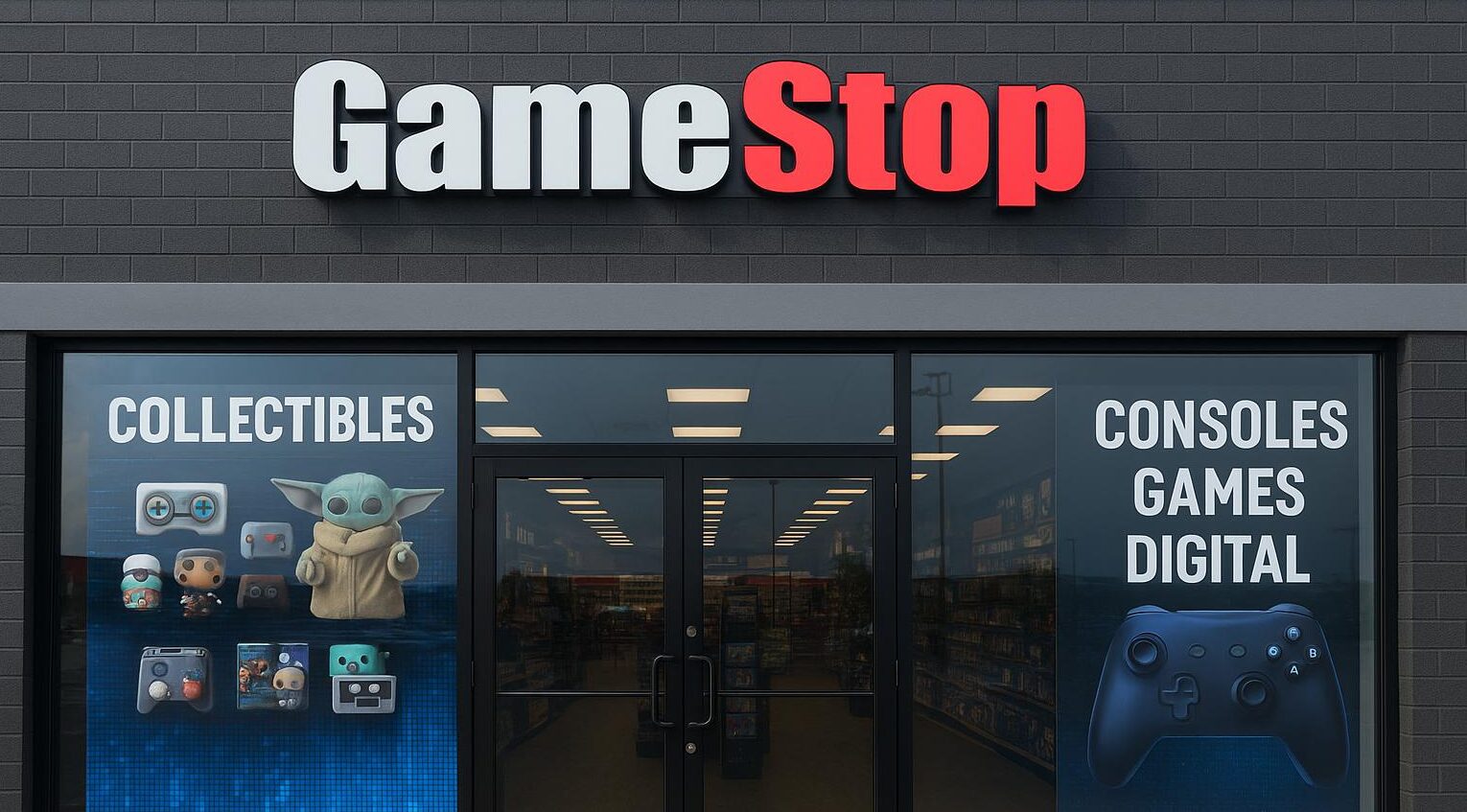
GameStop shares moved lower on Monday after CEO Ryan Cohen confirmed that the company had made a non-binding bid for eBay, adding a new twist to the investment case around GME stock. According to Seeking Alpha, Cohen said on CNBC that the proposed transaction would be financed with a mix of 50% cash and 50% stock. The report was published on May 4, 2026, at 12:11 p.m. ET.
For investors, the immediate focus is not simply whether GameStop wants to buy eBay. The larger issue is whether the proposed structure makes financial sense. In merger and acquisition analysis, “deal math” refers to how a transaction affects cash reserves, share dilution, balance sheet strength, future earnings potential and shareholder value. In this case, the market’s negative reaction suggests investors are weighing whether GameStop’s strategic ambitions could come at a meaningful cost to existing shareholders.
GameStop Shares Fall After Ryan Cohen Confirms eBay Bid
The key development is clear: GameStop has made a non-binding bid for eBay, and the proposal would be split evenly between cash and stock. A non-binding bid means the offer is not a final, legally enforceable acquisition agreement. It signals interest, but it does not guarantee that a transaction will happen.
That distinction matters for investors using an online broker or trading platform to follow GME stock. Non-binding proposals can create volatility because they introduce a possible strategic shift without providing all the details investors need to value the outcome. Until there is clarity on price, financing, regulatory risk and eBay’s response, the market is left to assess the potential implications with limited information.
GameStop’s share-price decline indicates that investors may be concerned about the scale and logic of the transaction. GameStop is historically known as a video game retailer and remains one of the most closely watched meme stocks in U.S. equity markets. eBay, by contrast, is a large online marketplace business. A potential combination would raise questions about strategy, execution and whether GameStop can create value from such a move.
Related articles





Why the 50% Cash and 50% Stock Structure Matters
The financing mix is central to the market reaction. Cohen’s confirmation that the bid would be funded half in cash and half in stock gives investors two immediate issues to evaluate: how much cash GameStop would need to deploy, and how much dilution shareholders could face.
Cash financing can strengthen a bid because it gives the seller more certainty. However, it also reduces the buyer’s financial flexibility. If GameStop uses a large portion of its cash position in a major acquisition, investors may question how much capital would remain for operations, technology investment, store strategy, digital initiatives or future opportunities.
Stock financing creates a different concern. When a company issues shares to fund a deal, existing shareholders may own a smaller percentage of the combined company. This is known as dilution. Dilution is not automatically negative if the acquired business adds enough earnings, cash flow or strategic value. But investors often react cautiously when the potential benefits are uncertain.
In this situation, the market appears to be asking whether GameStop’s stock is being used as currency in a transaction that could reshape the company’s risk profile. For GME stock, which has historically experienced sharp swings driven by sentiment, trading activity and retail investor attention, any stock-funded acquisition structure can become especially sensitive.
Strategic Logic: Marketplace Ambition or Execution Risk?
A potential GameStop-eBay combination would represent a major strategic pivot. GameStop has been associated with physical retail, gaming products and attempts to redefine its business model. eBay operates as an online marketplace connecting buyers and sellers across a wide range of categories. The investment case would likely depend on whether GameStop can credibly argue that eBay’s marketplace infrastructure complements its own brand, customer base or digital ambitions.
The possible strategic appeal is easy to understand at a high level. eBay has marketplace capabilities, consumer traffic and seller relationships. GameStop has brand recognition, a loyal retail investor following and a customer base tied to gaming and collectibles. A combined strategy could theoretically target online resale, collectibles, gaming hardware, consumer electronics or community-driven commerce.
But the risks are equally clear. Large acquisitions are difficult to execute, especially when the buyer and target have different business models. Investors may question whether GameStop has the operating track record to integrate a marketplace platform or unlock value from eBay’s existing business. Execution risk can weigh heavily on a stock even before a deal is finalized.
That is why the market’s focus on “deal math” is important. Strategic storytelling alone is rarely enough for institutional investors. They generally want to see a clear path to earnings growth, free cash flow generation and return on invested capital. Without those details, the proposal may be viewed as ambitious but financially uncertain.
What GME Investors Should Watch Next
For GME investors, the next phase is likely to center on details that are not yet fully visible from the initial confirmation. The first issue is whether eBay engages with the proposal. A bid can be made, but the target company’s board must evaluate whether it is credible, attractive and in shareholders’ interests.
Second, investors will want to know the implied valuation. The accessible details from the Seeking Alpha report confirm the bid structure but do not provide a full transaction price in the visible text. Without the offer value, it is difficult to determine whether the proposal is expensive, opportunistic or strategically reasonable.
Third, market participants will watch how GameStop frames the rationale. If management can explain how an eBay deal would improve revenue, margins, cash flow or long-term competitiveness, investor sentiment could shift. If the explanation remains broad, GME stock may continue to face skepticism.
Fourth, investors should monitor potential dilution. A 50% stock component means the number of new shares issued could become a central part of the debate. For retail investors, this is especially important because dilution can affect future EPS, ownership percentage and valuation multiples.
What This Means for Retail Investors
The GameStop eBay bid is a reminder that event-driven headlines can quickly change the risk profile of a stock. GME is already a highly watched name among retail traders, and a potential acquisition involving eBay adds another layer of uncertainty.
For investors building a diversified portfolio through index funds, ETFs or individual equities, the key lesson is to separate headline excitement from financial analysis. A bold acquisition bid can create upside if it unlocks value, but it can also create downside if the transaction stretches the buyer’s balance sheet, dilutes shareholders or distracts management.
In the stock market today, investors are placing greater emphasis on capital discipline. That means companies are often rewarded for clear strategy, strong cash flow and careful use of shareholder capital. GameStop’s proposed eBay bid will likely be judged through that lens.
FAQ
Why did GameStop stock fall?
GameStop shares moved lower after Ryan Cohen confirmed that the company had made a non-binding bid for eBay, funded 50% with cash and 50% with stock.
What does a non-binding bid mean?
A non-binding bid signals acquisition interest but does not represent a completed or legally final deal. Terms can change, negotiations can fail, and the target company does not have to accept the proposal.
Why does the 50% stock component matter?
A stock-funded portion could dilute existing shareholders if GameStop issues new shares to finance the transaction. Dilution can reduce each existing shareholder’s ownership percentage.
Is the eBay bid guaranteed to happen?
No. The report describes the bid as non-binding, meaning there is no confirmed final transaction based on the available information.
What should investors watch next?
Investors should watch for eBay’s response, the implied transaction value, GameStop’s strategic rationale, dilution details and any financing updates.
Disclaimer: This article is for informational purposes only and does not constitute financial advice. Always conduct your own research before making any investment decisions.