
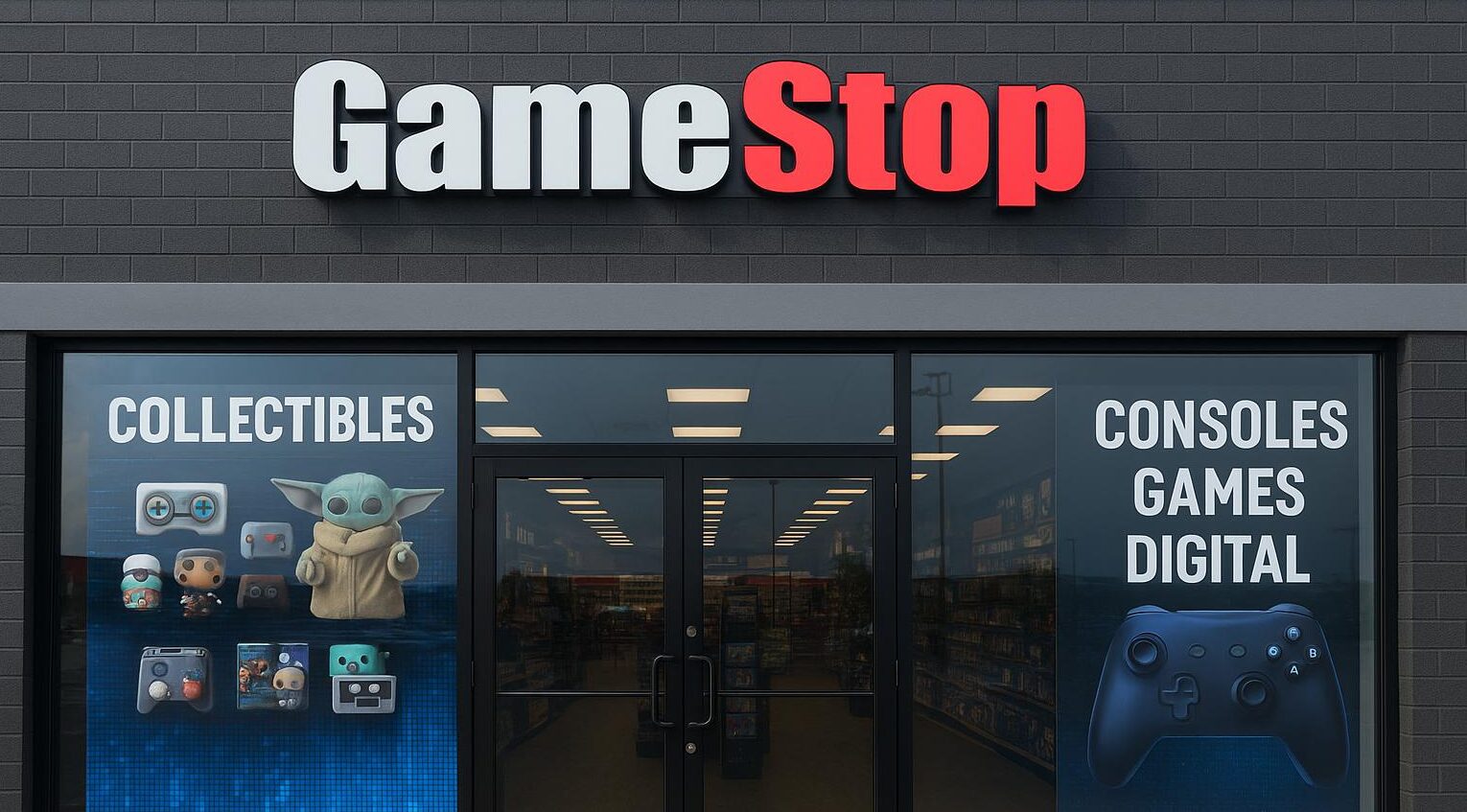
GameStop will release Q3 FY2025 results Tuesday, December 9, after the close. Street expectations center on ~$987 million in revenue and ~$0.20 in EPS. The setup: whether cost controls and tighter inventory can sustain profitability while the top line stabilizes. Watch gross margin mix (software/hardware/collectibles), operating expense discipline, cash balance, and any color on store optimization and digital initiatives. Guidance and holiday read-through for Q4 will likely dictate the post-print move.
Headline expectations: revenue, EPS, and cadence
Analysts project mid-teens year-over-year growth in Q3 revenue to roughly $987 million, with EPS around $0.20. That implies a modest improvement from last year’s holiday set-up, driven mainly by mix and cost control rather than outsized category growth. Historically, GameStop’s Q3 is a bridge into its most seasonal quarter (Q4), so the quality of Q3 results matters less than what management says about holiday momentum and category trends exiting November.
Three numbers will frame the debate right after the release:
- Revenue (~$987M): Is the growth broad-based or concentrated in a few categories or regions?
- Non-GAAP EPS (~$0.20): How much was driven by opex discipline vs. gross margin expansion?
- Gross margin: Direction of merchandise margins (especially pre-owned and software) and the drag from lower-margin hardware.
What will move the GameStop stock
1) Margin mix and inventory quality
GameStop’s consolidated gross margin hinges on mix: hardware (low margin) vs. software, pre-owned, accessories, and collectibles (generally higher margin). Investors will home in on:
- Attachment & pre-owned: Trade-ins and pre-owned sales can add profitable mix; trends here are a clean margin tell.
- Inventory health: A leaner inventory position reduces markdown risk and frees cash. Look for commentary on aged inventory and shrink.
2) Operating expense discipline
The company has been aggressively managing SG&A, including portfolio optimization and closing underperforming stores. Continual opex control can offset category volatility, but the market will want evidence that savings don’t erode traffic, service levels, or e-commerce execution. Any quantification of cost take-outs that are structural (not just one-time) will be well received.
Related articles





3) Cash, capital allocation, and balance-sheet flexibility
GameStop’s balance sheet remains central to the thesis. Key watch-items:
- Ending cash and equivalents (net of any marketable securities) and working capital trends.
- Inventory turns and payables—signals on vendor terms and supply chain efficiency.
- Capital allocation update: The Street will listen for guardrails on potential buybacks, debt, or non-core investments.
4) Strategic updates: store base, digital, and policy choices
GameStop continues to rationalize the store base and emphasize efficiency. Beyond footprint, investors want to understand:
- E-commerce and omnichannel: Progress on site conversion, delivery times, and cross-channel programs like buy-online-pick-up-in-store.
- Category strategy: Accessories, collectibles, and PC gaming peripherals can smooth console cycle volatility.
- Treasury/investment policy: Any update on the company’s stance toward bitcoin or alternative assets will get attention, but investors will prioritize how such policies impact liquidity, volatility, and risk management rather than narrative alone.
5) Q4 holiday read-through and guidance
Because Q4 (November–January) does the heavy lifting for the year, management’s qualitative tone matters as much as any numeric guide:
- Console/AAA slate: How are flagship titles, promotions, and bundles landing?
- Traffic and conversion: Store traffic vs. digital growth; any early holiday data points.
- Promotional environment: Whether discounting is intensifying across big box and online competitors—and what that means for margins.
Business segments to watch
- Hardware: Expect volatility. Revenue lifts on units but margins remain thin. Bundles can nudge mix, but aggressive promotions elsewhere can pressure pricing.
- Software & digital: The industry’s long-term shift to digital remains a secular headwind for packaged software. Look for signs of resilience via exclusive editions, trade-in programs, or value-add services.
- Collectibles & accessories: A potential margin stabilizer. Performance here can offset cyclical console softness and contribute to more predictable profitability.
- International vs. North America: Regional mix can influence margins and operating costs; commentary on Europe vs. U.S. trends will help frame holiday elasticity.
Scenario analysis for GameStop
Bull case: GameStop posts clean revenue growth with better-than-expected gross margins, SG&A stays tight, and management strikes a confident tone on holiday demand. Cash trends improve, inventory looks healthy, and collectibles/accessories outperform. Outcome: short-term relief rally, with investors more open to a multi-quarter stabilization narrative.
Base case: Results roughly in line; margins stable, but top-line growth concentrated and promotional intensity tempers Q4 optimism. Outcome: shares churn as the market waits for clearer proof of durable mix and cash-flow traction.
Bear case: Gross margin slippage from promotions or inventory clearance overwhelms opex savings; commentary suggests a tougher Q4 setup. Outcome: de-rating until evidence emerges that store optimization and category mix can defend profitability.
Key numbers for your notepad
- Revenue: ~$987M
- EPS (non-GAAP): ~$0.20
- Gross margin: Direction vs. last year; mix of software/pre-owned/accessories vs. hardware
- SG&A: Sustainability of cost reductions; store base changes
- Cash & inventory: Liquidity runway, inventory turns, and markdown risk
- Q4 color: Promotions, holiday traffic, and attach rates
Market context heading into the print
GME remains headline-sensitive and volatile. The fundamental debate in late 2025 is whether disciplined cost control and a leaner footprint can anchor recurring profitability despite the secular drift to digital downloads. Near term, expectations are measured: the stock reaction should hinge less on “one quarter” and more on whether mix quality, cash discipline, and holiday cadence are moving in the right direction.
Conclusion
For Tuesday’s report, focus on mix and money—gross margin quality, SG&A discipline, cash, and inventory. If GameStop shows it can protect margins while stabilizing sales and managing holiday promotions, the market may start to price a steadier earnings base into FY2026. If not, investors will likely keep GME in “show-me” territory until proof points emerge on sustainable profitability and cash generation.
FAQ
When does GameStop report earnings?
After the market close on Tuesday, December 9, 2025.
What are the consensus estimates on GameStop stock?
About $987 million in revenue and $0.20 in EPS for Q3 FY2025.
Which KPIs matter most?
Gross margin mix, SG&A discipline, cash/inventory, and holiday read-through into Q4.
What could surprise to the upside?
Stronger collectibles and accessories margins, healthier pre-owned trends, and evidence of lean inventories supporting cleaner markdowns.
Biggest risks?
Promotional pressure into the holidays, a weaker software pipeline, and any slip in cost control that narrows operating leverage.
Disclaimer: This article is for information and educational purposes only and not investment advice. Markets are volatile and involve risk, including loss of principal. Do your own research and consider consulting a licensed financial professional before making investment decisions.