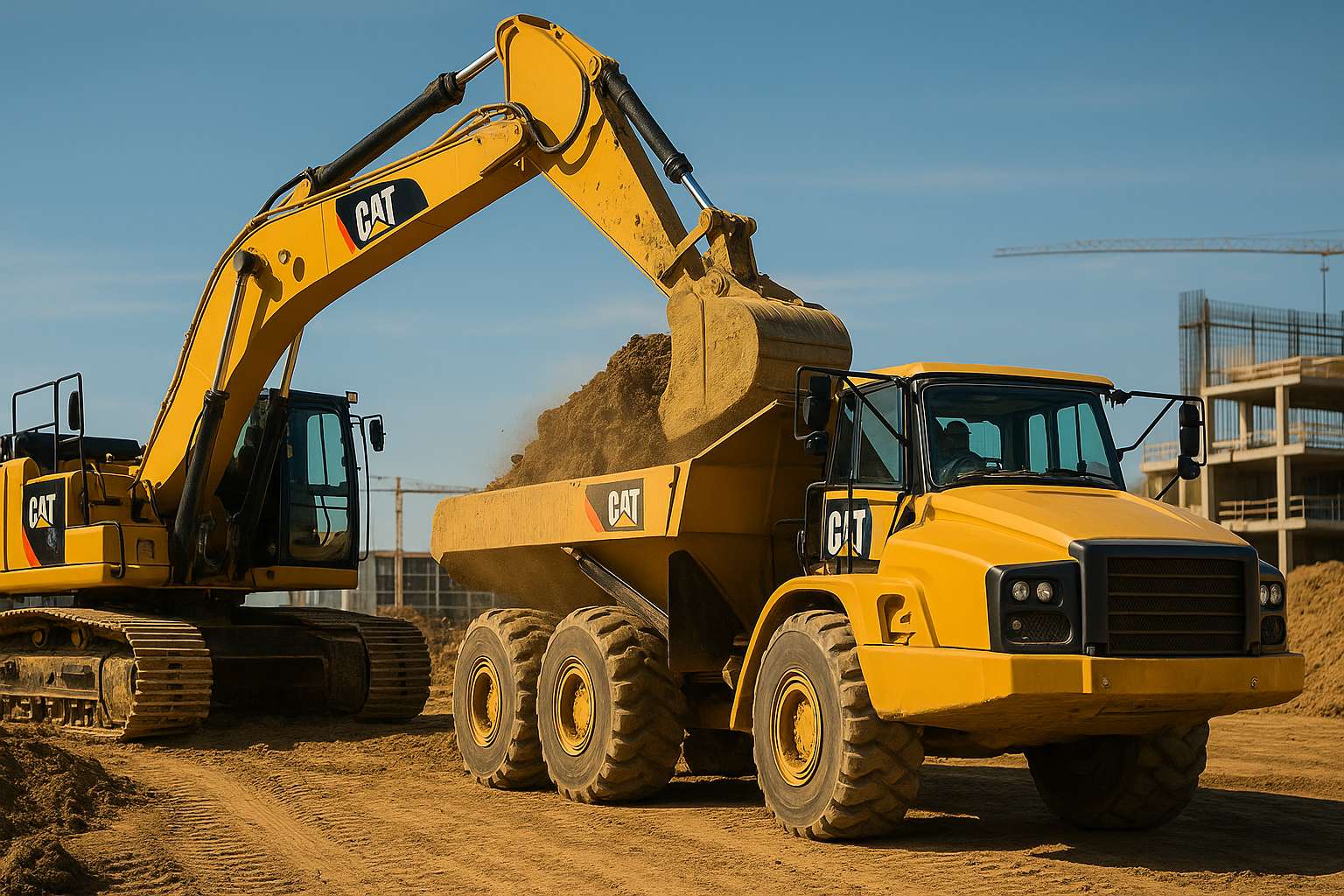
Introduction: A Heavyweight in Motion
The Caterpillar stock (NYSE: CAT) is once again capturing investor attention. The world’s largest maker of construction and mining equipment is benefitting from a global wave of infrastructure spending, resilient profit margins, and renewed optimism about industrial growth.
As the U.S. and international economies channel billions into rebuilding roads, bridges, data centers, and renewable energy facilities, Caterpillar stands as one of the clearest beneficiaries — and one of the most reliable dividend payers in the industrial sector.
Caterpillar Stock Performance: New Highs in 2025
Caterpillar shares have staged an impressive rally throughout 2025.
- Current price: $503.54 USD (as of Oct 8, 2025)
- Day range: $487.27 – $509.33 USD
- 52-week range: $267.30 – $509.48 USD
- YTD performance: +18 %
After consolidating through the summer, CAT recently broke to fresh record highs above $500, supported by strong earnings visibility and an improving margin outlook.
The breakout reflects not just cyclical recovery but also structural demand for equipment tied to infrastructure, energy, and data-center construction — sectors now in expansion mode globally.
Analyst Upgrades and Margin Strength
Earlier this week, Erste Group upgraded Caterpillar to Buy, citing the company’s “margin resilience” amid moderate cost inflation. Analysts expect Caterpillar to maintain an operating margin around 19–20 %, a remarkable level for an industrial manufacturer facing higher input costs.
Caterpillar’s pricing power — strengthened by its service and parts network — has allowed it to offset rising steel and logistics expenses. Moreover, recurring revenues from its aftersales and digital monitoring systems have added stability to cash flows.
Global Drivers: Infrastructure, Energy, and Digitalization
Caterpillar sits at the crossroads of three powerful global investment themes:
- Infrastructure Boom
The U.S. Infrastructure Investment and Jobs Act, along with similar programs in Europe and Asia, continues to support steady order intake across construction, heavy machinery, and road equipment. - Energy and Data Centers
Beyond traditional construction, Caterpillar benefits from rising demand for energy backup systems and power solutions for AI data centers — a niche that has quietly become one of its fastest-growing revenue streams. - Emerging-Market Expansion
Countries in South America, India, and Africa are ramping up infrastructure spending, creating long-term tailwinds for Caterpillar’s global dealer network and financing arm.
Trade and Tariff Headwinds
Still, Caterpillar’s global footprint means it cannot escape the effects of tariffs and trade policy. The company has warned of potential tariff expenses between $1.5 and $1.8 billion in 2025, driven by import duties on steel and equipment components.
While management has navigated such pressures before, investors should note that tariffs could weigh on margins in the second half of the year, especially if supply chains tighten or commodity costs spike again.
Caterpillar as a Dividend Stock
For many investors, Caterpillar is not just a cyclical play — it’s a dividend anchor.
The company boasts one of the most consistent payout records in the industrial sector:
- Current dividend yield: ≈ 1.7 % (annualized)
- Dividend per share: $5.40 USD (2025)
- Payout ratio: roughly 35 %, leaving ample room for future increases
Caterpillar has raised its dividend for 30 consecutive years, placing it among the Dividend Aristocrats of the S&P 500.
Combined with robust free cash flow and disciplined capital allocation, this makes CAT a favorite among income-focused investors seeking both yield and growth exposure.
Financial Outlook: Momentum with Caution
Caterpillar’s management continues to guide for stable revenue growth in 2025, driven by solid equipment sales and a growing services segment. Analysts forecast:
- Revenue: around $75 billion ( +6 % YoY )
- EPS: ~ $22.30 USD
- Free cash flow: > $8 billion
However, short-term risks include potential order slowdowns if global construction weakens or if tariffs erode price competitiveness.
From a technical standpoint, the stock is trading above its 50- and 200-day moving averages, confirming a bullish long-term trend. Near-term consolidation between $480 and $520 is likely before another leg higher.
Why Long-Term Investors Still Like Caterpillar
- Global scale and brand dominance – unmatched dealer network and product reliability.
- Diversified exposure – construction, mining, energy, and industrial power systems.
- Strong balance sheet – manageable debt and healthy liquidity.
- Steady dividends – consistent payout and capital-return program.
- AI and energy exposure – new growth through backup-power and digital-monitoring solutions.
In short, Caterpillar represents a rare combination of industrial stability, dividend quality, and growth optionality in an era of uncertain macro trends.
Conclusion: A Solid Machine for the Next Decade
The Caterpillar stock remains one of Wall Street’s most dependable industrial names.
While tariff pressures and input costs pose real risks, the company’s execution, pricing power, and dividend discipline position it well for the long haul.
For investors seeking a blend of income, infrastructure exposure, and durability, Caterpillar continues to deliver — literally and figuratively.
At current levels, modest pullbacks could present attractive entry points for long-term portfolios.
FAQ: Caterpillar Stock (2025 Update)
1. Why is Caterpillar stock rising in 2025?
Strong demand from global infrastructure and energy projects has boosted orders and margins, pushing the stock to record highs.
2. Is Caterpillar a good dividend stock?
Yes. With over 30 years of dividend increases, a 1.7 % yield, and a conservative payout ratio, Caterpillar is considered one of the most reliable income stocks in the industrial sector.
3. What are the main risks?
Tariff costs, cyclical slowdowns in construction, and input-price inflation are key risks to watch.
4. How does Caterpillar benefit from AI?
The company supplies power generators and energy systems used to support AI data centers — an emerging source of growth.
5. What’s the stock outlook for 2026?
Analysts expect continued strength, with potential upside toward $550 if margins hold and global infrastructure demand remains firm.
Disclaimer
This article is for informational purposes only and does not constitute investment advice, financial analysis, or a solicitation to buy or sell any security. All data reflect market conditions as of October 2025. Investors should perform their own due diligence or consult a licensed financial advisor before making investment decisions.