A New Industrial Era for AI
Artificial intelligence is entering a new stage — one that goes far beyond algorithms and cloud software. It is becoming industrial, reshaping global infrastructure, energy systems and robotics.
In separate remarks this week, Nvidia’s Jensen Huang, Dell Technologies’ Michael Dell and SoftBank’s Masayoshi Son described how AI demand is colliding with real-world limits — and why the next wave of investment will be physical, not just digital.
Nvidia: The Engine of the Revolution
Nvidia remains the center of gravity for the AI economy. CEO Jensen Huang told CNBC that computing demand has risen “substantially” in recent months, driven by overwhelming interest in the company’s new Blackwell GPU.
“Demand for Blackwell is really, really high,” Huang said. “We’re at the beginning of a new industrial revolution.”
Blackwell chips are built to power trillion-parameter AI models and have become the cornerstone of data-center upgrades across the world. Nvidia now controls the vast majority of the high-end AI-processor market and continues to expand through its CUDA software ecosystem and networking technologies.
For investors, Nvidia represents the foundation of the AI infrastructure build-out — the equivalent of selling engines during the steam revolution.
Dell: When Power Becomes the Bottleneck
While Nvidia builds the brains of AI, Dell Technologies provides its body — the servers and storage that make large-scale computing possible.
CEO Michael Dell confirmed that enterprise demand remains extremely strong, yet warned of an unexpected obstacle: energy supply.
“The clear constraint that we hear about from our customers, including OpenAI, is power,” he said. “Many customers tell us, ‘Don’t deliver until we have power in the building.’ ”
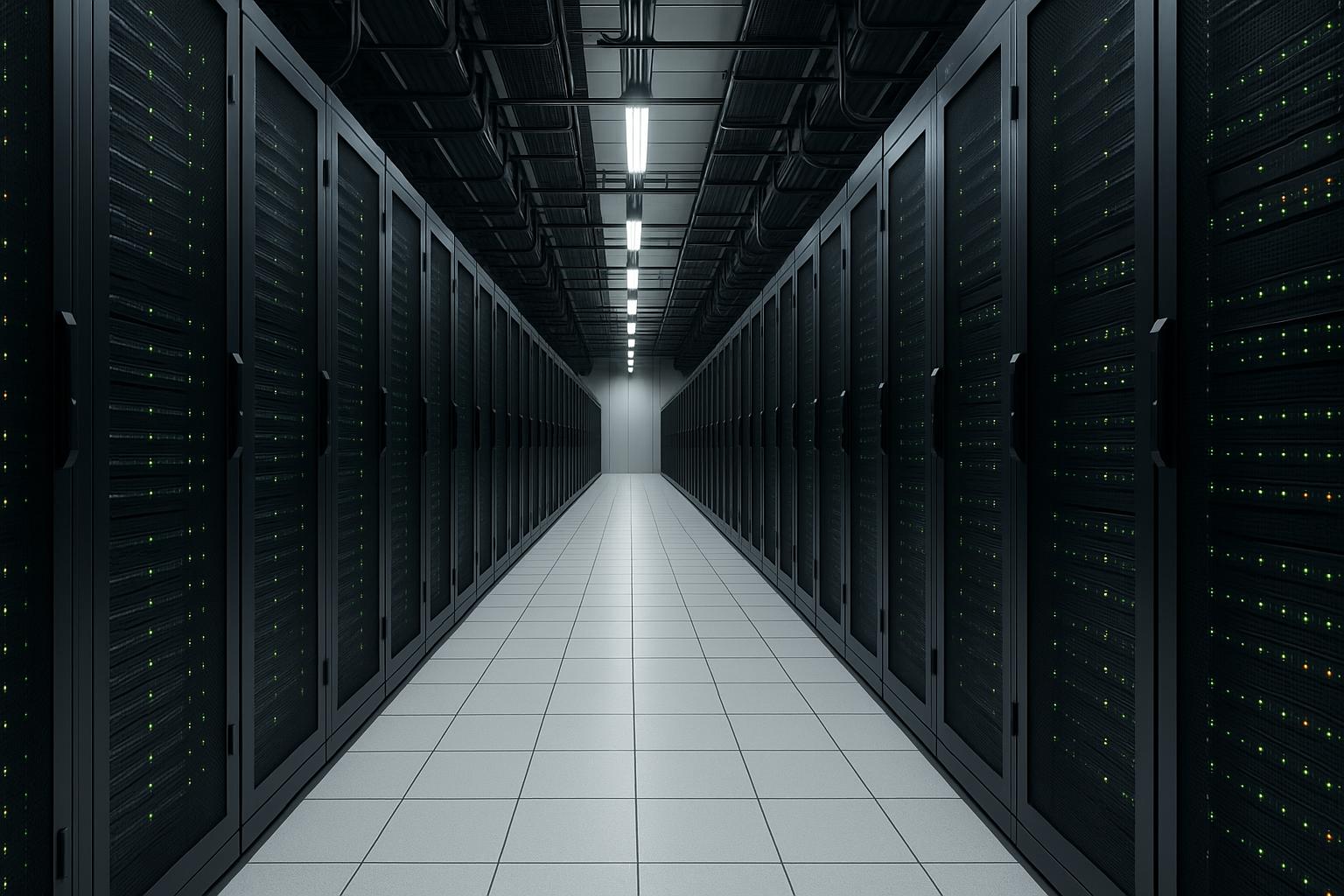
AI data centers consume vast amounts of electricity, and new facilities are pushing local grids to their limits. Dell’s latest AI servers, powered by Nvidia Blackwell GPUs, are back-ordered for months as clients race to secure capacity.
The company now finds itself balancing extraordinary demand with physical constraints — highlighting that the AI boom is as much an energy story as a technology story.
SoftBank: Betting on Physical AI
While Nvidia and Dell focus on the digital core of AI, SoftBank is moving decisively into its physical expression. The group announced plans to acquire ABB’s robotics division for $5.4 billion, a deal Chairman Masayoshi Son calls the foundation of “Physical AI.”
“Together with ABB Robotics, we will fuse artificial super intelligence and robotics — driving a groundbreaking evolution that will propel humanity forward,” Son said.
SoftBank already owns stakes in automation leaders such as Berkshire Grey, AutoStore and Agile Robots. With ABB Robotics, it gains one of the most advanced industrial platforms in the world. The goal is to merge cloud-based intelligence with autonomous machines — from factory arms to service robots — creating systems that see, reason and act.
For Son, robotics is the logical next chapter after the smartphone and internet revolutions: AI that moves.
The Convergence: Compute, Power and Motion
Taken together, the messages from Huang, Dell and Son reveal how AI’s evolution is converging across three fronts: computation, energy and embodiment.
- Computation – the GPUs and processors that train and deploy intelligence.
- Energy and infrastructure – the data centers, cooling and power that sustain them.
- Physical AI – robots and devices that bring digital cognition into the real world.
This convergence marks the birth of an AI industrial ecosystem, one that will demand trillions in capital spending over the coming decade — from chips and servers to batteries, grids and autonomous machinery.
The Energy Challenge
As the world builds out this new infrastructure, energy has become the decisive variable. The International Energy Agency estimates that AI data-center consumption could triple by 2030, equivalent to the annual power use of a mid-sized country.
Companies are responding with efficiency breakthroughs: immersion cooling, advanced power management and renewable integration. Yet the race between computing growth and energy capacity remains tight. The sustainability of the AI boom may hinge on how quickly the energy industry modernizes.
Investor Outlook: The Next Wave of AI Capital
For investors, the implications are clear. The AI Capex super-cycle is only beginning.
- Nvidia is positioned to benefit from record GPU demand through 2026.
- Dell stands to gain from continued data-center expansion and infrastructure modernization.
- SoftBank’s robotics pivot could unlock the next frontier of automation.
At the same time, energy technology — from grid storage to clean-power generation — is becoming a hidden winner of the AI revolution.
Beyond Technology: The Human Dimension
The coming decade will not only test corporate balance sheets but also society’s capacity to adapt. As AI becomes physical, it will change labor markets, energy policy and global trade patterns.
Leaders like Huang, Dell and Son frame this shift as progress, yet it raises pressing questions about sustainability and ethics. The next industrial revolution will need not just faster machines, but wiser governance.
Conclusion: The Dawn of Physical Intelligence
From Nvidia’s GPUs to Dell’s power-hungry servers and SoftBank’s intelligent robots, AI is becoming tangible — a new industrial infrastructure for the 21st century.
The world is no longer just coding intelligence; it is constructing it.
Factories, data centers and autonomous machines are emerging as the pillars of a smarter, interconnected economy.
As this transformation unfolds, one truth stands out: the future of AI will be built, powered and moved — not just programmed.
FAQ
1. What is Nvidia’s Blackwell GPU?
It is Nvidia’s newest processor family, engineered for large-scale generative-AI workloads with higher speed and efficiency than previous models.
2. Why are companies worried about power shortages?
AI data centers consume enormous electricity. Several operators have delayed installations because local grids cannot yet supply the required power.
3. What does “Physical AI” mean?
It describes the fusion of artificial intelligence with robotics — creating machines that can learn and act autonomously in the real world.
4. Why did SoftBank buy ABB Robotics?
To expand its leadership in robotics and integrate AI capabilities into industrial automation, logistics and service sectors.
5. What’s the key takeaway for investors?
AI infrastructure — chips, servers, energy systems and robotics — will drive the next major investment cycle of the global technology industry.
Disclaimer
This article is for informational purposes only and does not constitute investment advice or a recommendation to buy or sell securities. All information reflects conditions as of October 2025. Investors should perform their own due diligence or consult a licensed financial advisor before making investment decisions.